Tansania – Von Arusha nach Tarangire
Vom entspannten Frühstück zwischen zutraulichen Dik-Diks in der Lodge geht es für uns weiter Richtung Süden. Begleite uns auf der Fahrt von Arusha nach Tarangire, vorbei an bunten Sonntagsprozessionen, Massai-Hirten mit ihren Herden und genieße mit uns ein ganz besonderes zweites Frühstück direkt vom Straßengrill.
Von Arusha nach Tarangire
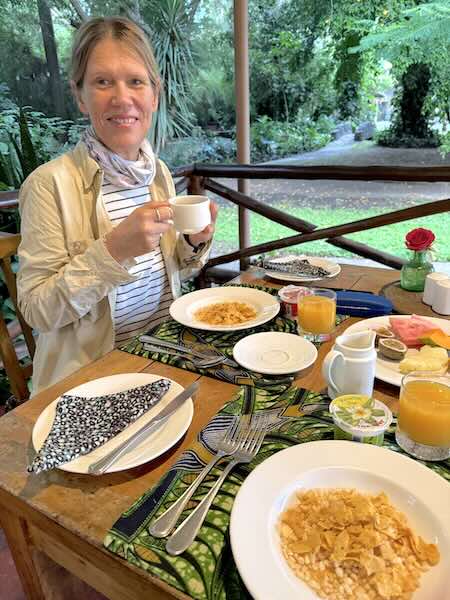
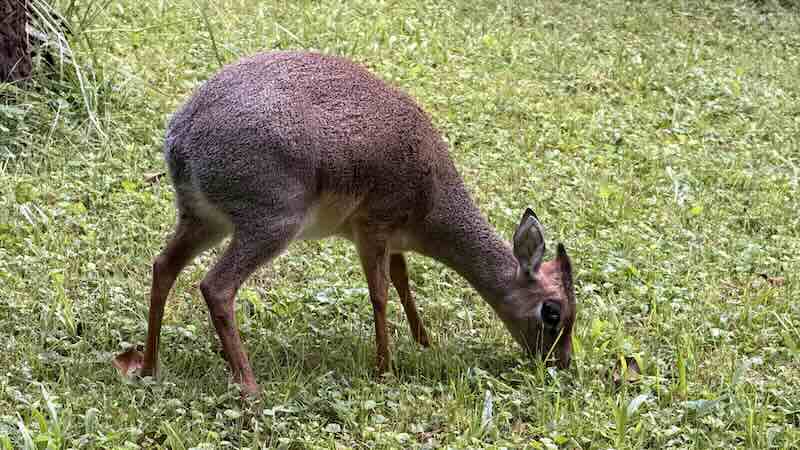
Wir hatten gut in der Arumeru River Lodge geschlafen. Für 8:30 Uhr hatten wir uns mit Elly verabredet. So hatten wir noch genug Zeit für ein ausgiebiges Frühstück. Die vielen leckeren Früchte am Buffet hatten für einen guten Auftakt in unseren zweiten Tag gesorgt. Die vielen kleinen Dik-Dik‘s, die wir schon in der Früh vor unserem Bungalow gesehen hatten und die vielen Meerkatzen machten zudem Lust auf einen neuen schönen Tag hier in Tansania. Wir saßen also beim Frühstück auf der Terrasse, tranken unseren Kaffee, genossen die Früchte und vor uns auf dem Rasen weideten noch einige Dik-Dik‘s und gegenüber auf dem Dach vom Swimming-Pool Haus saßen zwei Meerkatzen und blickten in unsere Richtung. Hier in der Lodge haben sich die Dik-Dik‘s an die Menschen gewöhnt, wobei sie in freier Wildbahn eher scheue Tiere sind.
Nach dem Auschecken hatte uns Elly bereits in der Hotel-Lobby erwartet und es ging nun los in den zweiten Tag. Auf nach Tarangire.
Tansania-Straßenbild am Sonntag
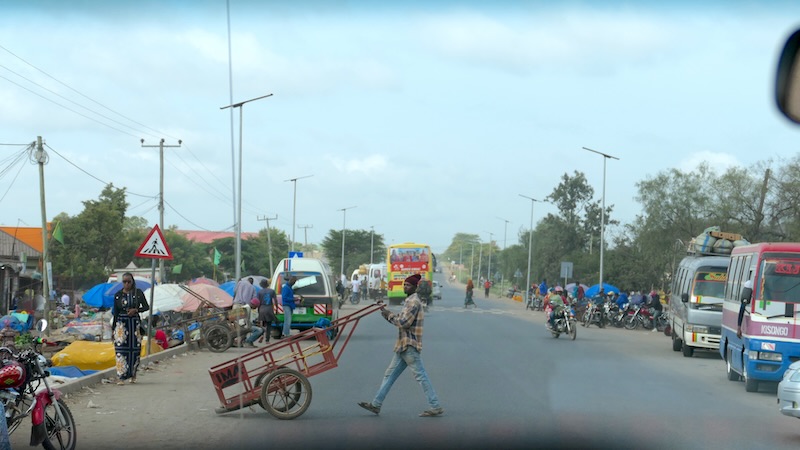
Von der Arumeru River Lodge ging es wieder auf die Old Moshi Road, aber dieses Mal nach links. Die Old Moshi Road, welche heute die Nyerere Road heißt, ging nun gen Westen raus aus Arusha.
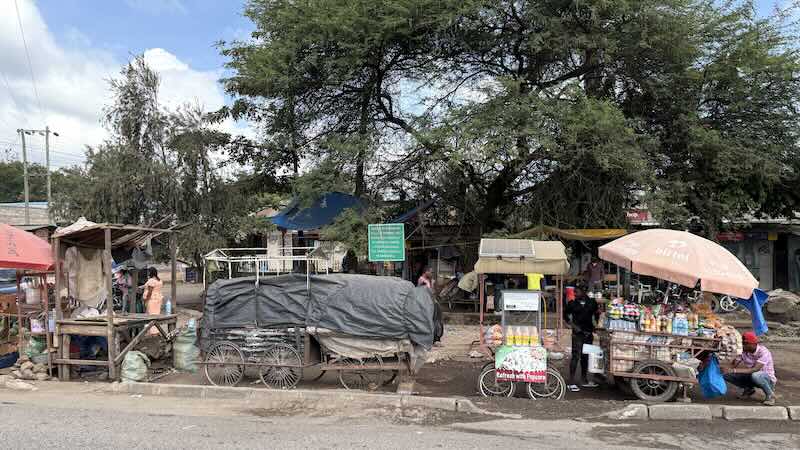
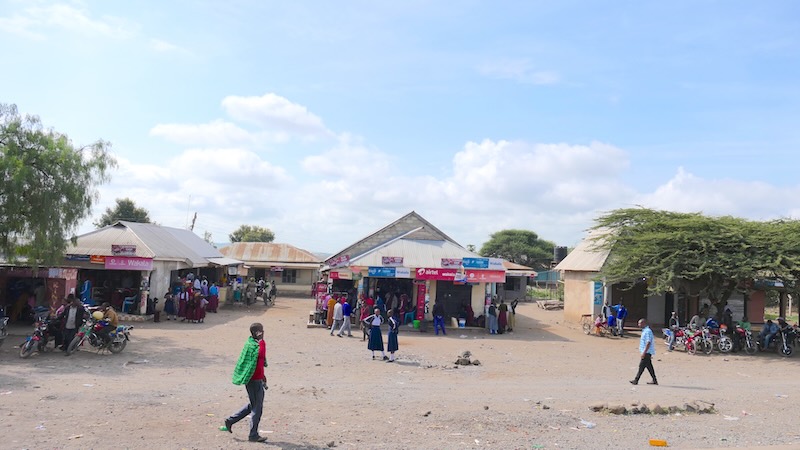
Heute am Sonntag waren natürlich nicht so viele Menschen und Fortbewegungsmittel auf den Straßen unterwegs, aber die Händler hatten trotzdem ihre Geschäfte auf. Auch wenn die einzelnen Straßengeschäfte nicht danach aussahen waren sie doch auf gutes Business ausgelegt. So gab es „Furniture & Design“. Im Angebot hatten sie klar Tische, Betten und vieles mehr. Gärtnereien boten ihre vielen Pflanzen an und natürlich gab es auch viele Früchte. Zum Beispiel die hier in der Gegend angebauten Karotten. „Karoti“,wie Karotte auf Swahili heißt. Aber gegen 9:00 Uhr waren bereits alle Karotten verkauft und es gab nur noch einen kläglichen Rest.
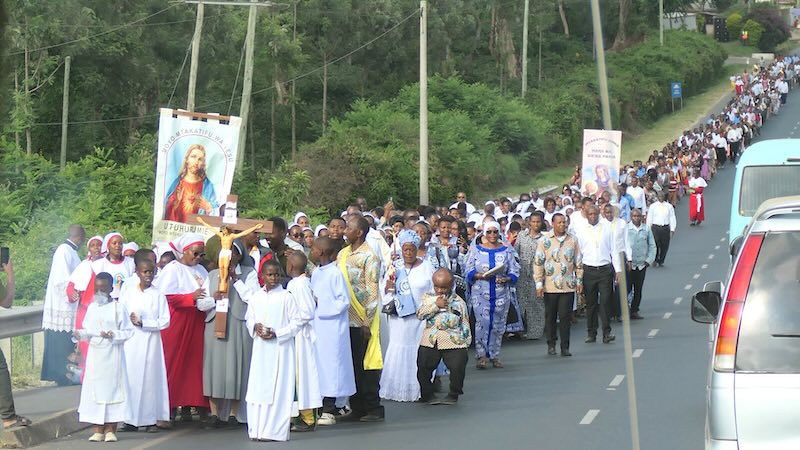
Moyo Mtakatifu Wa Yesu
Auf dem Weg raus aus Arusha kam uns auf der linen Seite ein Prozessions-Zug entgegen. Elly meinte es handelt sich hierbei um Katholiken welche jeden Sonntag hier entlangkommen und zu ihrer Kirche wandern.
„Moyo Mtakatifu Wa Yesu heißt auf Deutsch Heiligstes Herz Jesu“, so sagte Elly. Diese Pfarrei findet auch hier in Arusha großen Zuspruch und besonders sonntags feiern sie ihren Glauben. Es ist ein wichtiger Bestandteil in vielen Gemeinden rund um Arusha.
Nun waren wir raus aus Arusha und die Landschaft an den Seiten der Straße wurde karger. Elly erzählte uns, dass er hier in Arushain einem kleinen Hochhaus wohnt. Bald aber wird er sein eigenes Haus haben und darauf freut er sich schon. Dann meinte er „bei einem eurer nächsten Besuche hier in Tansania müsst ihr euch Zeit für Arusha mitbringen. Es ist wirklich eine tolle Stadt. Es gibt hier viel zu sehen, zu schlendern und viele tolle Geschäfte“.
Die Landschaft jenseits der Straßen
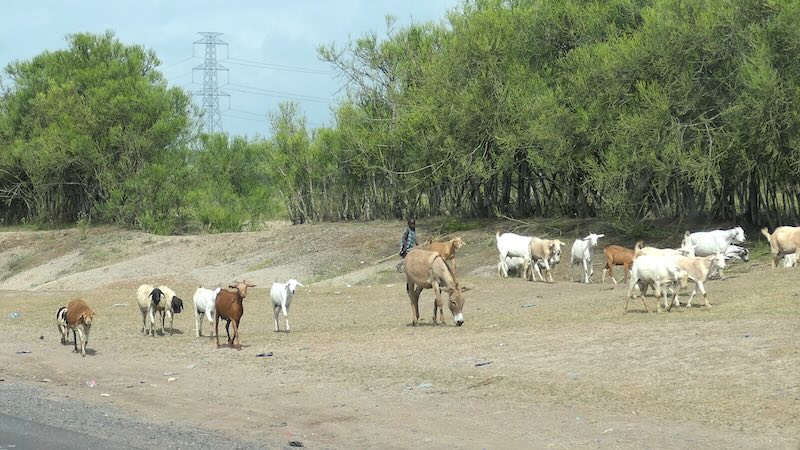
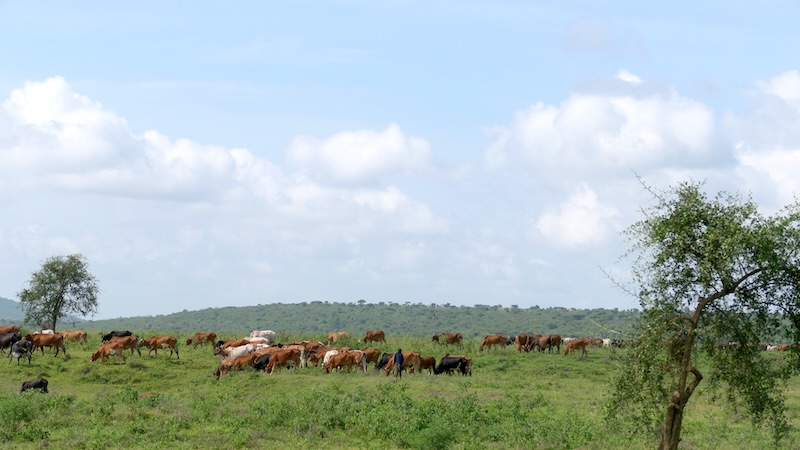
Die Landschaft auf dem Weg nach Tarangire ist geprägt durch die vielen Rinderherden. Viele Fahrzeuge waren auf der Landstraße noch nicht unterwegs. Hauptsächlich Dala-Dala’s. Einige Lastwagen fuhren vor uns oder kamen uns entgegen. In der kargen Landschaft gab es viele Massai-Hirten. Sie hüteten Ziegen und immer wieder waren auch vereinzelt Esel dabei. Die Ziegen zeigten sich in ihren vielen Farben. Sie waren braun, weiß und dann in so vielen Mixfarben braun, weiß mit schwarz. Die Ziegen schlenderten an der Straße entlang. Ihre Ohren pendelten links und rechts vom Kopf auf und ab. Alle Tiere waren hier schon wohl genährt, obwohl die karge Landschaft etwas anderes vermuten gelassen hatte.
Weiter in der Landschaft sahen wir dann auch sehr große Rinder-Herden. Die Rinder zeigten sich in den typischen Brauntönen. Die vielen großen Herden waren einfach überdimensioniert für diese karge Landschaft. Viel war da dann nicht für alle übrig.
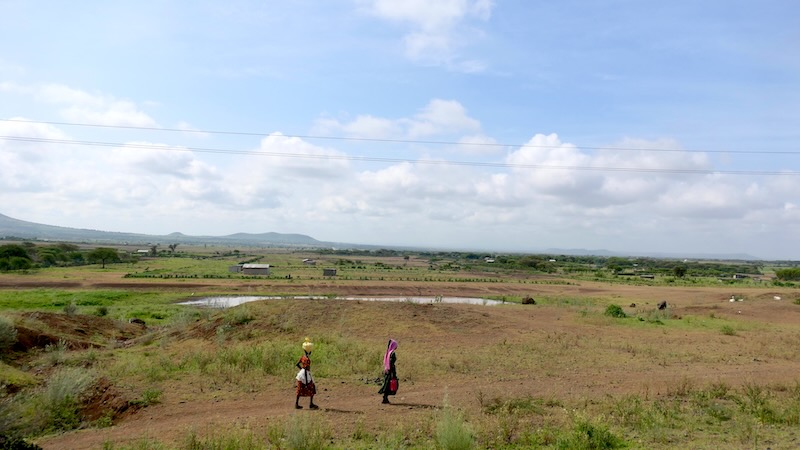
Ab und an sahen wir auch Frauen auf dem Sandweg längs gehen. Sie hatten ihre bunten Kleider an, trugen ihr Gepäck auf dem Kopf oder in den Händen. Irgendwo im Nirgendwo an der Seite der Landstraße auf dem Weg ins Nirgendwo. So sieht es jedenfalls aus. Aber jeder wird wohl ein Ziel haben.
Maiskolben vom Straßengrill
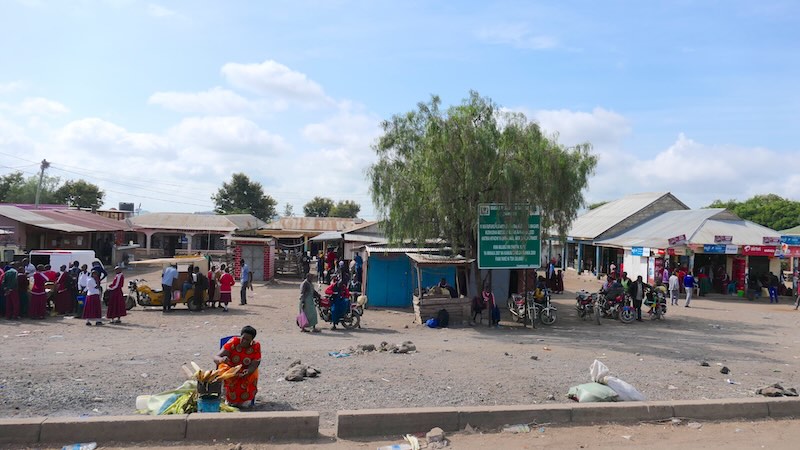
Auf der Strecke sind wir durch viele kleine Orte gekommen. Auch dort zeigte sich das gleiche Straßenbild wie in Arusha. Es gab viele Händler in ihren Hütten links und rechts der Straße. Direkt an der Straße gab es dann auch Frauen, welche geröstete Maiskolben anboten.
Wir waren noch dabei unsere Fotos zu machen und zack hielt Elly an. Beugte sich zum Fenster am Beifahrersitz rüber, zückte einen Geldschein und die Frau bei den Maiskolben wusste sofort was er wollte. Sie übergab ihm am Fenster drei Maiskolben in Zeitungspapier eingewickelt, nahm das Geld und schon ging es weiter. Ein Maiskolben als zweites Frühstück, einfach nur lecker.
Dann nach zweieinhalb Stunden bogen wir von der Landstraße ab und fuhren durch den Torbogen vom Tarangire National Park. Während ich noch ganz vertieft in meinen Gedanken, war drehte sich Elly kurz zu uns um während er durch den Torbogen fuhr.
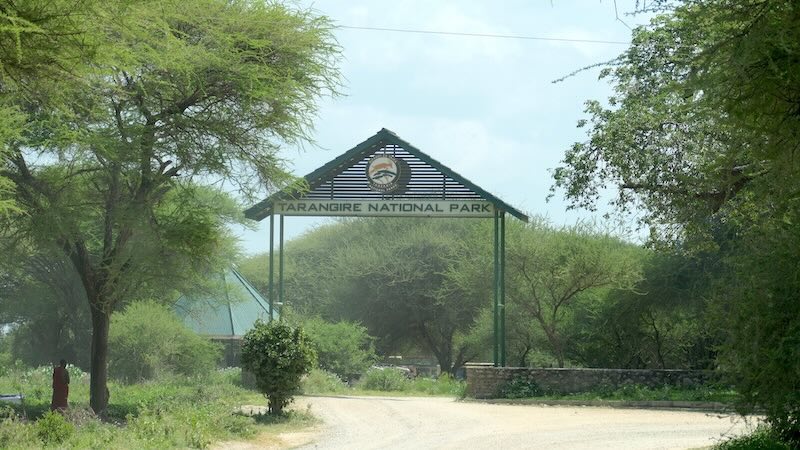
„Karibu sana“ und wir erwiderten „Asante sana“.