Tansania – Pirschfahrt im Arusha National Park

Vom historischen Flair der Hatari Lodge führt uns die Pirschfahrt durch den Arusha Nationalpark direkt an die schimmernden Momella-Seen. Begleite uns an der Seite unseres Guides Elly zum Tanz der Flamingos im alkalischen Wasser, erlebe den wohl unterhaltsamsten Pavian-Stau Afrikas und erfahre, wie Elly im echten Zwiegespräch mit Diademmeerkatzen philosophierte.

Flamingos and monkey jams in Arusha National Park

With our thoughts still completely occupied by the concept of brushing our teeth with a Sodom apple, we arrived back at Momella Gate. Safari life and dental hygiene—turns out they do go hand in hand. Time and again, I am absolutely fascinated by nature, traditional medicine, and its inhabitants, whether human or animal.

At Momella Gate, many of the other rangers were sitting in the shade with Elly, enjoying the last sips of their coffee. Elly had used these two hours to gather fresh insider knowledge about Arusha National Park: where the giraffes are currently roaming, where the various monkey families can be found, and whether there are plenty of flamingos gathered at the Momella Lakes. Now, just a quick trip to the restroom, and we were off again in our Land Cruiser, heading toward the Momella Lakes.

From Momella Gate to the Momella Lakes

From Momella Gate, we turned right toward the lakes. For a brief moment, we could make out the Hatari Lodge on our left. Honestly, without Elly pointing it out, I wouldn’t have taken a photo and we would have never even known it was there. But thanks to him, it became yet another highlight of our day.

We both remember the classic movie Hatari! and, of course, the actor Hardy Krüger. That very movie—whether you like it or not—along with Hardy Krüger, was what originally brought that authentic African lifestyle right into our living rooms back then. During one of our next trips to Tanzania, we will definitely make sure to include a stay at the Hatari Lodge in our itinerary.

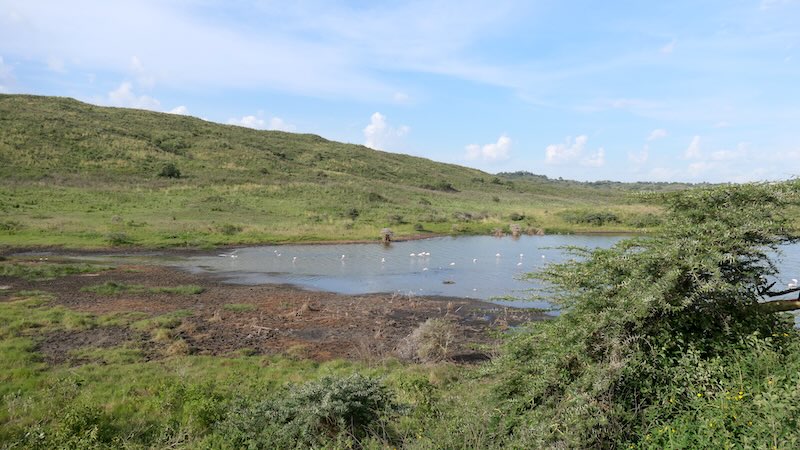
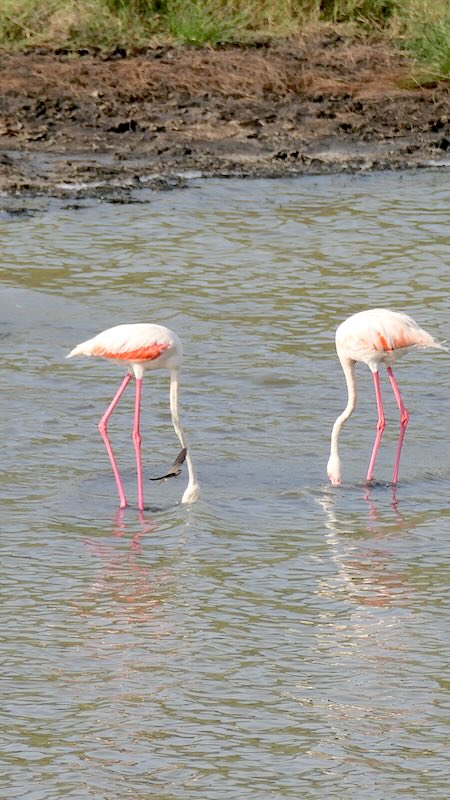
Our path now led us directly to the large signpost for the various lakes. We turned left, heading toward Big Momella Lake. The absolute main attraction at the Momella Lakes is the massive numbers of flamingos. I have already written about flamingos in one of our other articles. Here, these birds find a truly perfect habitat. The lakes are alkaline, saline, and fed by groundwater. The food supply is incredibly abundant, and the fluctuating water depth allows the flamingos to access their nourishment with ease. In the shallower parts, they are permanently bent over with their beaks submerged in the water, filtering for small crustaceans and algae. But they don’t just stand there quietly; they are constantly in motion.

Tap-dancing flamingos

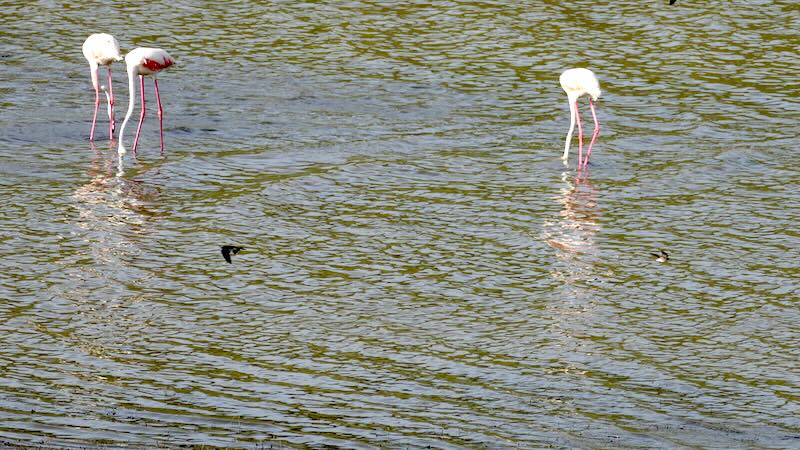
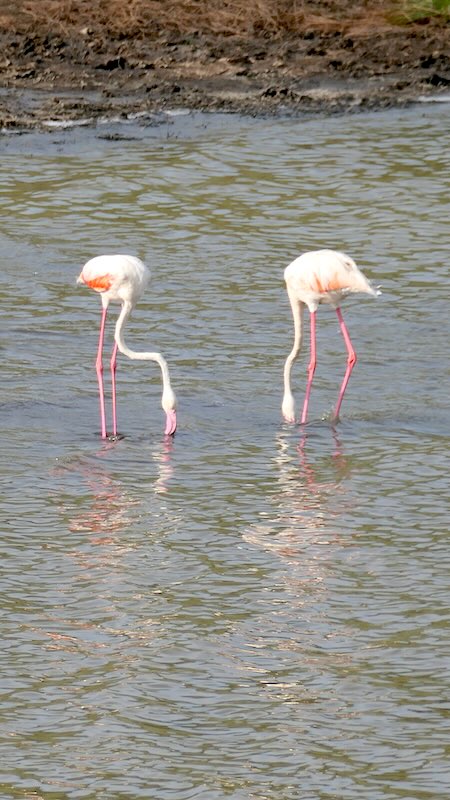
The flamingos were in continuous motion. In pairs or in small groups, but always rhythmically. And of course, their heads were down, with their bills moving through the water without pause. Our native storks back home do something similar, but nowhere near as intensely as this. „This is how they stir up the shrimp and algae from the bottom before filtering them with their large beaks,“ Elly explained to us.

The flamingos had truly captured Elly’s heart. He sat rather quietly up front at the steering wheel, gazing out over the lake. The first groups of flamingos were further out on the water, and it was only thanks to our powerful zoom lenses that we were able to capture great photos and videos. With a smartphone, that would have been rather difficult. But then the magic happened: Elly whipped out his smartphone and his binoculars. An African song was already playing on the car radio, very much reminiscent of The Lion King. He lined up his binoculars with the flamingos, held his phone camera right up to the eyepiece, and started recording. It was fascinating: tap-dancing flamingos perfectly synced to African music.

Turn the music on

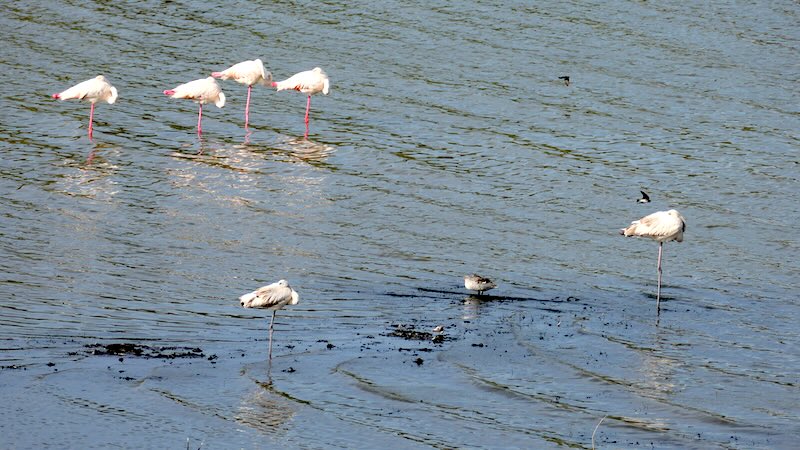
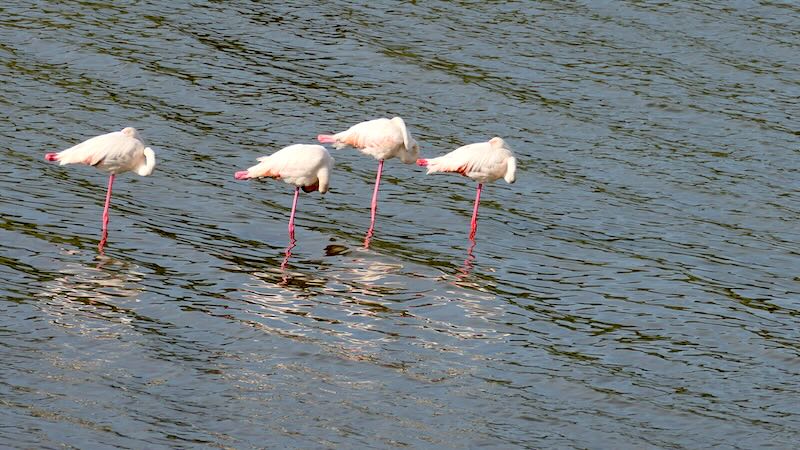
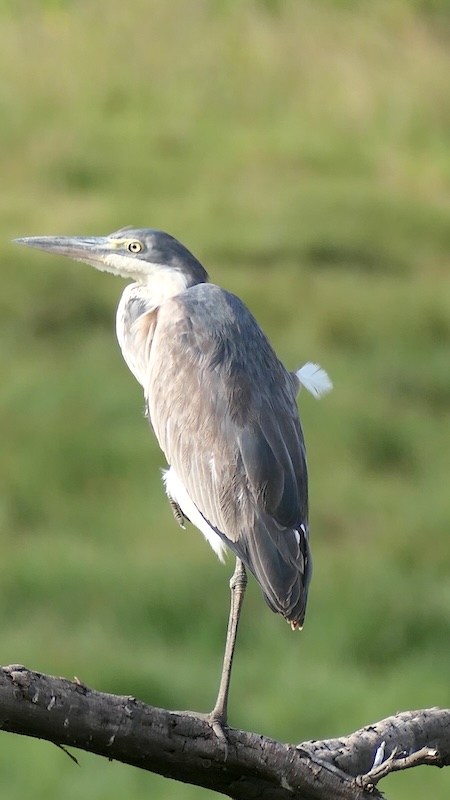
With the music playing, the flamingos suddenly seemed entirely different. They executed their movements precisely to the beat. They tap-danced solo, in pairs, and in entire groups. The spectacle became even more impressive due to the countless reflections on the glassy water. The first flamingos we saw only had a faint pink coloration, but at Big Momella Lake, the pink hues were incredibly vibrant. And then, at other moments, the flamingos just stood perfectly still in the water, balancing on a single leg. Because of the calm water and the intense pink color, the mirror images on the surface looked even more imposing. Meanwhile, completely inconspicuous along the shores, a few herons were hiding. Standing on a branch on just one leg—now that is a true art form.

Returning through the Small Serengeti

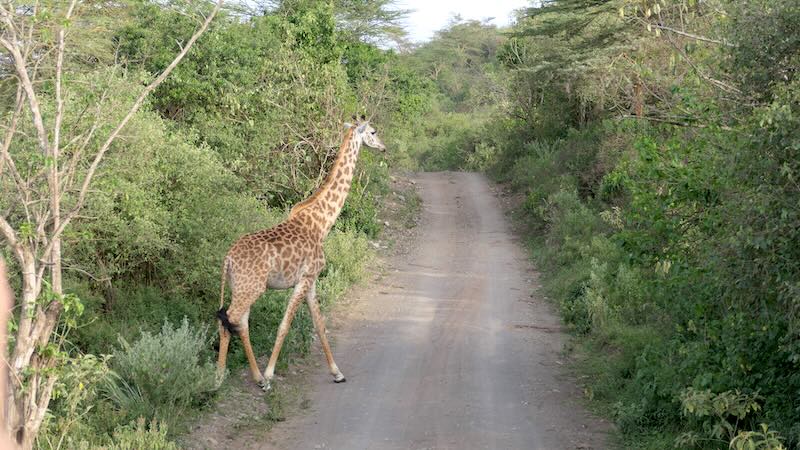
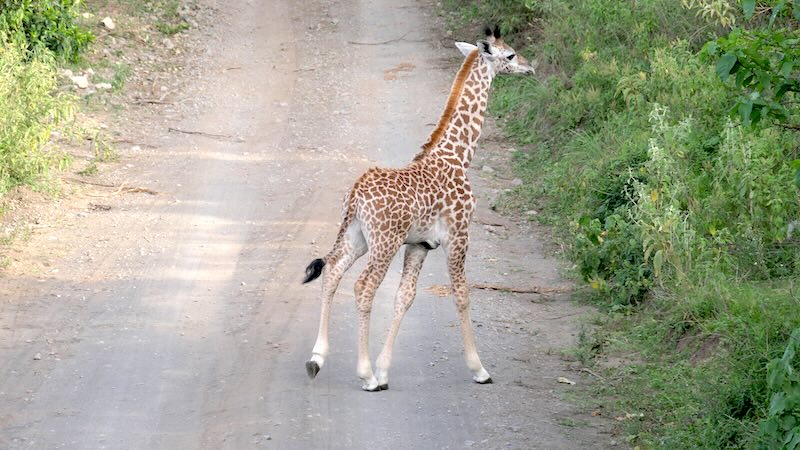
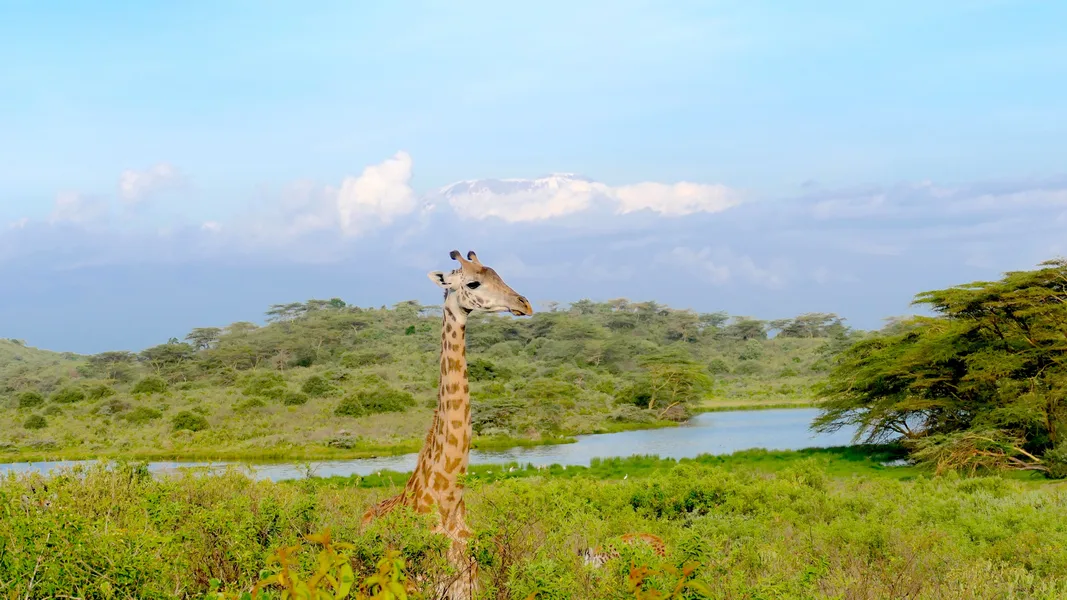
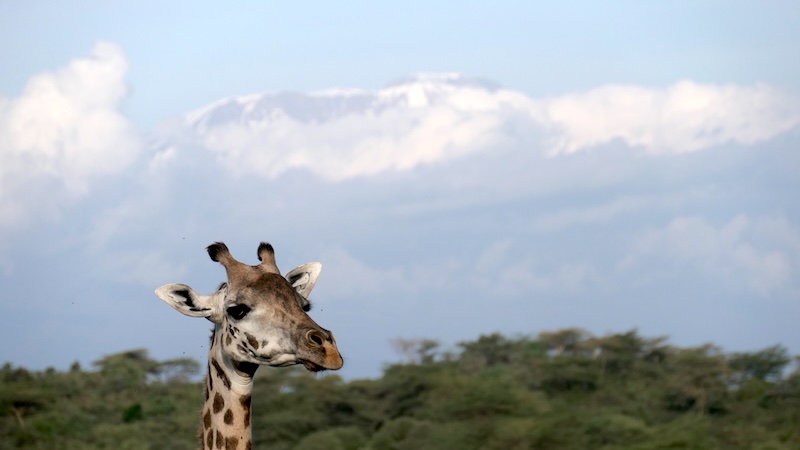
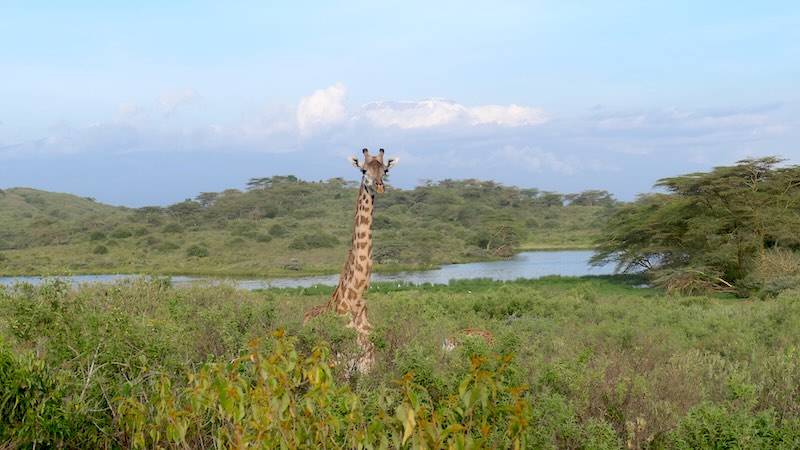
And there they were again: the giraffes. They were trotting very slowly right in front of us across the gravel track. Others stood amidst the dense bushes, with only their long necks poking out. Then, a female giraffe slowly ambled across our path. As she disappeared into the thicket, we spotted a tiny giraffe head on the left. A tiny head nestled between the shrubs—it was a very young giraffe calf. Small and cuddly compared to the five-meter giant beside it.

And just a moment later, „Radio Africa“ came running along behind them. That is exactly what makes the „Small Serengeti“ so special: the tiny wildlife encounters right in the midst of the grand scenery. After that, we encountered numerous blue monkeys and baboons again. They, too, are a vital part of life here in the Small Serengeti.

Dialogue with a monkey: The blue monkeys

Right by the side of the track, high up in the treetops, Elly spotted several blue monkeys. Absolutely nothing escapes Elly’s eyes. One of the monkeys was perched very impressively on a branch. Elly brought the Land Cruiser to a halt, and we snapped our photos. Alright, they’re just monkeys, I thought to myself. We can probably keep driving now; it’s not that exciting. But I had completely underestimated Elly. Elly rolled down the passenger window, and then he truly went to town.

He began to croak and grunt. Yes, you read that right. Elly, the ultimate all-rounder, began to talk monkey business.

Looking with different eyes

The blue monkey was completely taken aback, looking left, right, and straight ahead, freezing in its tracks. Where on earth is my rival? Where is my buddy? Then, the monkey joined in and started answering right back. What exactly they were discussing is something I don’t think even Elly knew for sure. Elly and the monkey locked in a deep dialogue—and it actually worked! We captured it all on video, and it was simply spectacular. Elly later told us, „Only these blue monkeys can produce such a wide variety of vocalizations, and some of their sounds even mimic human screams. That’s how I managed to learn their calls. And it works!“ Yes, it certainly did. From that moment on, I saw these blue monkeys through completely different eyes, and the memory will stay with me forever.

Baboon-induced traffic jam on the gravel road

We could see it from a distance: the gravel road was completely blocked. Right ahead of us, an entire baboon family was sitting comfortably in the middle of the track. Quite contentedly, they were grooming one another. The older family members were meticulously cleaning the fur of the little ones—a wonderful display of the baboons‘ social behavior. A few older individuals sat in a lookout position, scanning tightly in all directions. As our vehicle approached the group, absolutely nothing happened. Yes, you read that correctly: nothing.

The baboons had long since learned that the many Land Cruisers filled with tourists pose absolutely no threat to them. And so, they stayed right where they were, leaving us stuck in a safari traffic jam. However, we eventually had to keep moving, so Elly started edging closer at a snail’s pace, trying to gently convince them, baboon by baboon, to finally clear the path. Even though it took quite a while, it provided us with the perfect opportunity to study and photograph the baboons up close.

Shortly after, we reached the Ngongongare Gate, and from there, we took the direct route back to the Arumeru River Lodge.

We let the exciting day wind down beautifully while enjoying an excellent dinner.

Pirschfahrt im Arusha National Park

Noch mit den Gedanken ganz beim Zähneputzen mit Sodomsapfel sind wir wieder beim Momella Gate angekommen. Safari und Zähneputzen, auch das geht zusammen. Ich bin immer wieder begeistert von der Natur, der Heilkunde und seinen Bewohnern, ob Mensch oder Tier. Am Momella Gate saßen viele der anderen Ranger gemeinsam mit Elly im Schatten und genossen noch den letzten Kaffee. Elly hatte gerade diese zwei Stunden dazu genutzt wieder mehr über den Arusha NP zu erfahren, wo sich aktuell die Giraffen aufhalten, wo die vielen Affen-Familien anzutreffen sind und ob viele Flamingos an den Momella Seen anzutreffen sind. Nun noch einmal schnell auf die Toilette und dann ging es auch schon weiter im LandCruiser ab zu den Momella Seen.

Vom Momella Gate zu den Momella Seen

Vom Momella Gate ging es nun nach rechts ab zu den Seen. Für einen kurzen Moment konnten wir links die Hatari Lodge erkennen. Aber ohne Elly hätte ich kein Foto gemacht und hätten es auch nie erfahren. Aber so wurde es neben vieler anderer auch ein Highlight.
Kennen wir doch den Hatari Film und eben den Schauspieler Hardy Krüger.
Gerade dieser Film, man mag ihn mögen oder nicht, hatte gemeinsam mit Hardy Krüger uns damals das afrikanische Lebensgefühl direkt ins Wohnzimmer gebracht. Bei einem unserer nächsten Reisen nach Tansania werden wir auch die Hatari Lodge mit einplanen.

Unser Weg führte uns nun direkt an den großen Wegweiser für die vielen Seen. Wir sind dann nach links abgebogen hin zum großen Momella See. Die große Attraktion an den Momella Seen sind die vielen Flamingos. In einem meiner anderen Artikel hatte ich bereits einmal über Flamingos berichtet. Hier bietet sich den Flamingos ein sehr guter Lebensraum. Die Seen sind alkalisch, salzhaltig und werden auch mit Grundwasser gespeist. Das Nahrungsangebot ist hier sehr groß und auch die variierende Wassertiefe ermöglicht es den Flamingos gut an ihre Nahrung zu kommen. Im flacheren Teil sind sie permanent mit dem Schnabel vorn über gebeugt im Wasser und suchen nach Krebsen und Algen. Aber sie stehen nicht einfach ruhig da. Sie sind durchgehend in Bewegung.
Steppende Flamingos

Die Flamingos waren permanent in Bewegung. Zu zweit oder in kleinen Gruppen aber immer  rhythmisch. Und klar, der Kopf nach unten und der Schnabel durchgehend im Wasser. Unsere heimischen Störche machen es auch mehr oder weniger, aber so extrem eben dann doch nicht. „Damit wirbeln sie die Krebse und Algen auf und nehmen sie dann mit ihren großen Schnäbeln auf“ so erzählte es uns Elly.

Die Flamingos hatten es Elly angetan. So saß er eher still vorne am Steuer und blickte rüber auf den See. Die ersten Flamingos waren weiter hinten auf dem See und nur mit unserem guten Zoom konnten wir gute Fotos und Videos machen. Mit einem Handy eher schwierig. Und dann ging es los. Elly zückte sein Handy und sein Fernglas. Im Autoradio lief bereits ein afrikanischer Song, ganz nach „König der Löwen“ und dann ging es los. Er stellte sein Fernglas auf die Flamingos ein und dann hielt er sein Handy an das Fernglas und machte eine Aufnahme. Faszinierend. Steppende, tanzende Flamingos nach afrikanischer Musik.

Nach der Musik wirkten die Flamingos nun ganz anders. Zu den Rhythmen führten sie ihre Bewegungen aus. Sie steppten alleine, sie steppten zu zweit und in Gruppen. Beeindruckender wurde es dann noch durch vielen Spiegelungen im Wasser. Die ersten Flamingos hatten nur eine schwache rosa Färbung. Im „Big Momella Lake“ war die Färbung schon sehr viel stärker. Und dann wieder standen die Flamingos nur ganz ruhig im Wasser. Nur auf einem Bein. Durch das ruhige Wasser und die starke Rosa-Färbung wirkten die Wasserspiegelungen noch imposanter. Und ganz unscheinbar gab es an den Ufern einige Reiher. Auf einem Zweig nur mit einem Bein stehend, das ist schon eine Kunst.
Zurück durch die kleine Serengeti

Und wieder waren dort die Giraffen. Sie trotteten ganz langsam vor uns über die Schotterpiste. Sie standen inmitten der vielen Sträucher und nur die langen Hälse ragten hinaus. Dann kam ganz langsam ein Giraffenweibchen über den Weg getrottet. Als sie zwischen den Sträuchern verschwand sahen wir links einen kleinen Giraffen-Kopf. Ein kleiner Kopf zwischen den Sträuchern. Es war eine noch sehr junge Giraffe. Klein und knuddelig gegenüber der 5 Meter Gigantin.

Und einen Moment später kam „Radio Afrika“ hinterhergelaufen. Genau das macht „Small Serengeti“ aus, die kleine Tierwelt inmitten der großen. Dann wieder die vielen Diadem-Meerkatzen und Paviane. Auch sie gehören hier in die kleine Serengeti.
Im Zwiegespräch mit Affen – den Diademmeerkatzen

Direkt am Wegesrand in Baumwipfeln entdeckte Elly einige Diadem-Meerkatzen. Elly entgeht eben nichts. Einer der Affen saß sehr imposant auf einem der Zweige. Elly hielt den Landcruiser an und wir machten unsere Fotos. Ok, es sind halt Affen, so dachte ich nur bei mir. Jetzt können wir auch weiterfahren, ist nicht so spannend. Aber da habe ich die Rechnung ohne Elly gemacht. Elly drehte das Fenster vom Beifahrersitz runter und dann legte er los.

Er fing an zu Unken. Ja, du liest richtig. Elly, der Allrounder fing an zu Unken.

Der Affe war ganz irritiert und blickte nach links, nach rechts, nach vorne und hielt inne. Wo, wo ist der Kontrahent? Wo ist der Kollege? Dann legte auch der Affe los und antwortete. Über was sie sich nun unterhalten hatten, ich glaube das wusste Elly auch nicht so genau. Elly und der Affe im Zwiegespräch und genau das funktionierte. Und wir machten Videos. Es war einfach so beeindruckend. Elly erzählte uns dann später „nur diese Diadem-Meerkatzen können so unterschiedliche Laute von sich geben und einige Laute klingen sogar wie menschliche Schreie. So habe ich mir die Laute auch angeeignet. Und es funktioniert!“, sagte Elly. Ja, es funktionierte. Ab sofort sah ich diese Diadem-Meerkatzen mit anderen Augen und so bleiben sie im Kopf.

Pavian-Pavian-Stau Pavian-Stau auf der Schotterpiste

Wir sahen es schon von weitem. Die Schotterpiste ist belegt. Vor uns saß nun eine ganze Pavian-Familie auf der Piste. Ganz genügsam kümmerten sie sich umeinander. Die Älteren machten Fellpflege bei den Kleinen. Ein wunderbares Sozialverhalten der Paviane. Einige Ältere saßen in Habachtstellung mit Blick in alle Richtungen. Als wir uns nun der Gruppe näherten passierte nichts. Ja es passierte Nichts. Die Paviane hatten gelernt, die vielen LandCruiser mit ihren Touristen sind keine Bedrohung. Und so blieben sie sitzen und wir standen im Stau. Aber irgendwie musste es ja weiter gehen und so fuhr Elly im Stotter-Tempo an die Paviane heran und Pavian für Pavian versuchte er so dazu zu überreden, doch den Weg frei zugeben. Auch wenn es lange dauerte für uns war es die Gelegenheit die Paviane genauer zu studieren und zu fotografieren.

Dann kam auch schon das Ngongongare Gate und auf dem direkten Wege ging es zurück in die Arumeru River Lodge.

Den Abend ließen wir dann bei dem guten Abendessen ausklingen.
Ähnliche Beiträge