Rote Bananen, Autoreifen-Sandalen und die beste Eierspeise aus Mto wa Mbu
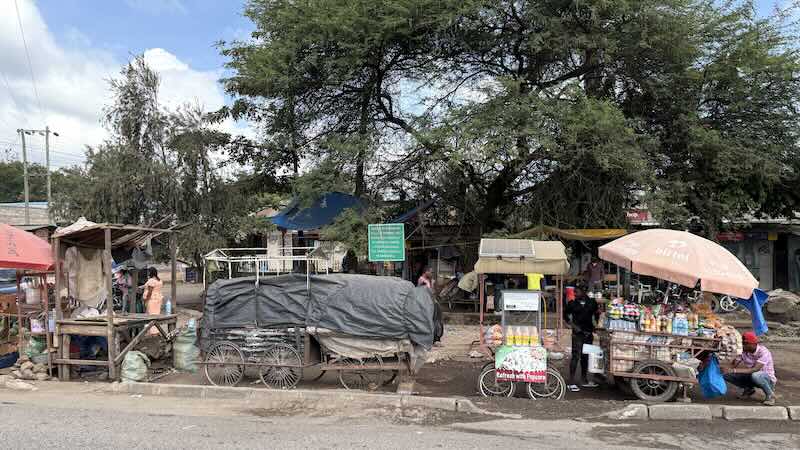
Nach einem herzlichen Wiedersehen mit unseren Lunch-Paketen lassen wir den Tarangire hinter uns und tauchen ein ins pralle Leben von Mto wa Mbu. Erlebe mit uns das geschäftige Treiben auf dem traditionellen Markt, staune über farbenfrohe rote Bananen sowie Schuhe aus alten Autoreifen und genieße das unvergleichliche Streetfood-Highlight Chips Mayai frisch aus der Pfanne.
Vom Tarangire zum Lake Manyara
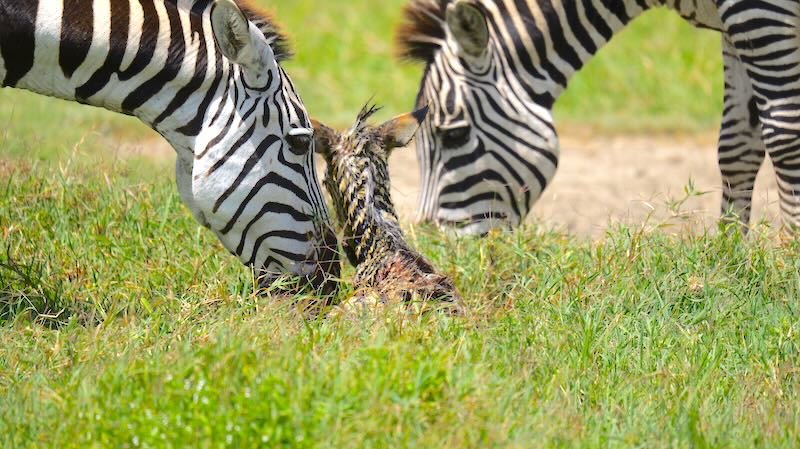
Unser Vormittag im Tarangire-Nationalpark war unglaublich artenreich, bevor es für uns weiter in Richtung Mto wa Mbu ging. Wir hatten nicht nur unvergessliche Eindrücke im Herzen mitgenommen, sondern auch eine enorme Menge an Fotos auf den Speicherkarten.
Am Gate angekommen, hieß es erst einmal ein paar Minuten warten. Unser Lunch-Paket war noch nicht da – beziehungsweise der Mitarbeiter aus dem Camp, der es uns bringen sollte, war noch unterwegs. Wir nutzten den kurzen Aufenthalt für einen Gang zu den Waschräumen. Wenn man sich das mal überlegt: Diese riesigen Entfernungen, die dort einfach so für die Übergabe eines Lunch-Pakets zurückgelegt werden, haben uns echt geplättet.
Es war allerdings nicht das erste Mal, dass wir eine solche Hilfsbereitschaft und logistische Weite erlebten. Auf Vancouver Island und Alert Bay in Kanada hatten wir etwas Ähnliches gemacht. Damals wurde uns ein kranker Wildvogel übergeben, den wir kurzerhand im Auto von der Insel mitgenommen haben. Nach einer dreistündigen Fahrt haben wir ihn auf Vancouver Island an einer vorher vereinbarten Tankstelle auf die Minute genau an die Mitarbeiter eines Tierarztes übergeben. In Tansania ist es genau das Gleiche. Die Menschen kennen die enormen Distanzen, man hilft sich untereinander und meistert die Herausforderungen des Alltags gemeinsam.
Am Ende mussten wir tatsächlich nur knapp fünf Minuten warten, dann bog der Camp-Mitarbeiter auch schon um die Ecke. Es ist immer wieder faszinierend, wie reibungslos das Improvisieren in diesen besonderen Ländern und mit diesen herzlichen Menschen funktioniert! Mit vollen Proviantboxen ging es schließlich weiter in Richtung Lake Manyara Nationalpark.
Auf den Markt von Mto wa Mbu
Vom Nationalpark-Gate aus fuhren wir zurück auf die Hauptstraße A104. An der Kreuzung Kwa Kuchinia bogen wir nach rechts ab, und in Makuyuni ging es dann nach links weiter auf der B144. Alle diese Fernstraßen sind hervorragend ausgebaut, sodass man zügig vorankommt. Die erste Strecke bis zur Makuyuni-Kreuzung kannten wir ja bereits von unserer gestrigen Hinfahrt. Doch eines war heute völlig anders: Gestern war Sonntag, heute am Montag pulsierte das pralle Leben auf dem Asphalt. Die Straßengeschäfte hatten alle geöffnet, und überall herrschte ein reges Treiben. Kinder sah man um die Mittagszeit allerdings keine an den Straßen – die drückten in diesen Stunden fleißig die Schulbank.
Kurz vor dem Gate zum Lake Manyara NP steuerte Elly einen kleinen, traditionellen Markt in dem lebhaften Ort Mto wa Mbu an. Er wollte uns natürlich die Gelegenheit geben, einen authentischen Markt seiner Heimat kennenzulernen, brauchte aber auch selbst noch eine frische Ergänzung für unsere anstehende Mittagspause.
Komm einfach mit – wir gehen gemeinsam über den Markt!
Fair Flip Flops oder doch etwas „Made in China“?
Der Markt ist überschaubar und besteht im Grunde aus zwei großen Hauptgassen, einer Stirnseite und den Ständen entlang der Straßenseite. Elly parkte den Land-Cruiser geschickt direkt am Marktgelände. Ein freier Parkplatz mitten im Getümmel – ein perfekter Start!
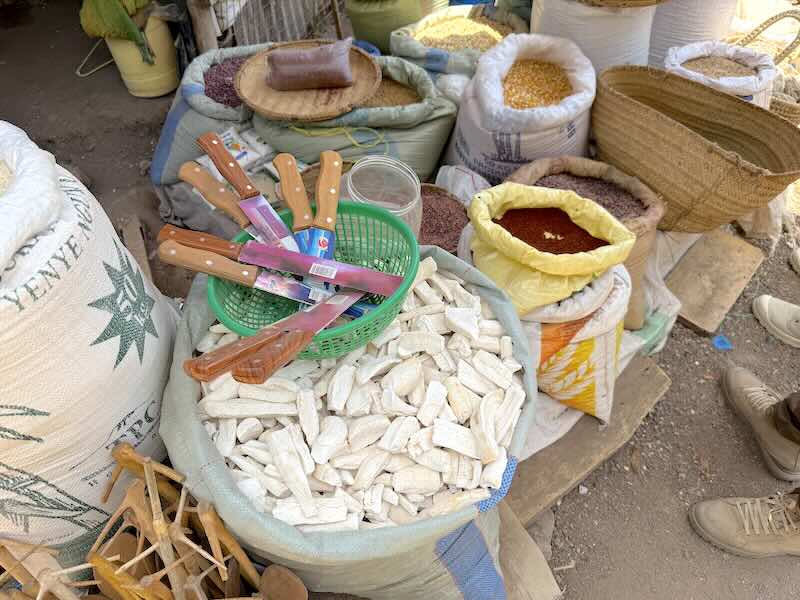
Ein Stück weit erinnert solch ein Markt an unsere heimischen Märkte in Europa. Ich musste unwillkürlich an den berühmten Naschmarkt in Wien denken. Vorne an der Straße wurden auf großen Plastikplanen getrocknete Kürbiskerne und Maniokwurzeln zum Verkauf angeboten. Direkt daneben gab es einen Stand mit tragbaren Holzkohle-Feuerstellen aus Metall. Bei uns in Deutschland kauft man sich gusseiserne Grills zum puren Vergnügen für den Garten. Hier sind diese Konstruktionen ganz normale, essenzielle Kochstellen für den täglichen Gebrauch.
Gleich daneben trafen wir auf klassische Haushaltswaren: Plastikeimer, Kehrbesen und Vorratsdosen. Und was soll ich sagen? Allesamt trugen sie den Aufdruck „Made in China“. Der Kontrast zwischen uralter Tradition und moderner Massenware ist hier allgegenwärtig. Direkt neben den industriellen Plastikeimer stapelten sich nämlich handgefertigte Schöpfkellen, die geschickt aus alten Blechdosen recycelt wurden – das Blech sauber ausgerollt und zu einem neuen Becher geformt.
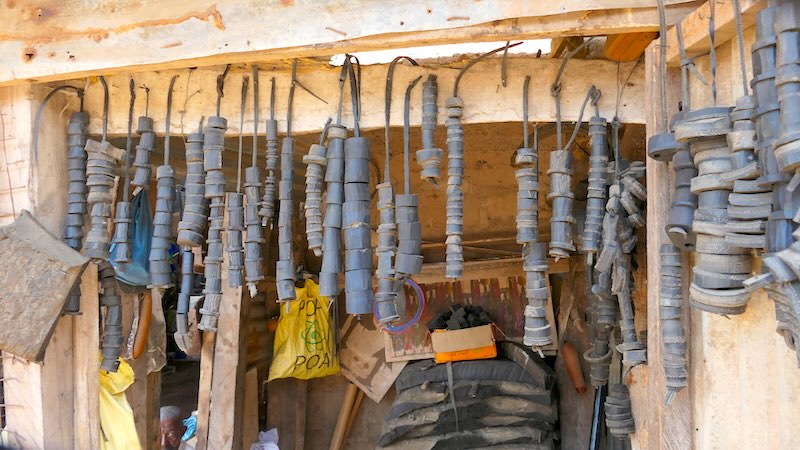
Genau wie die kleinen Läden an den Überlandstraßen, so war es auch hier auf dem Markt organisiert. Eine winzige Holzhütte, die Tür weit geöffnet, und drinnen eine kleine, staubige Handwerkswerkstatt. Hier werden aus alten Autoreifen robuste Sandalen geschnitten. Viele der Massai besitzen genau diese traditionellen Schuhe. Sie sind extrem bequem, nahezu unzerstörbar und durch dieses clevere Upcycling echte „Fair Flip-Flops“, die ganz nebenbei auch noch gut für die Umwelt sind.
Afrikanische Garteneier und der Suaheli-Unterricht
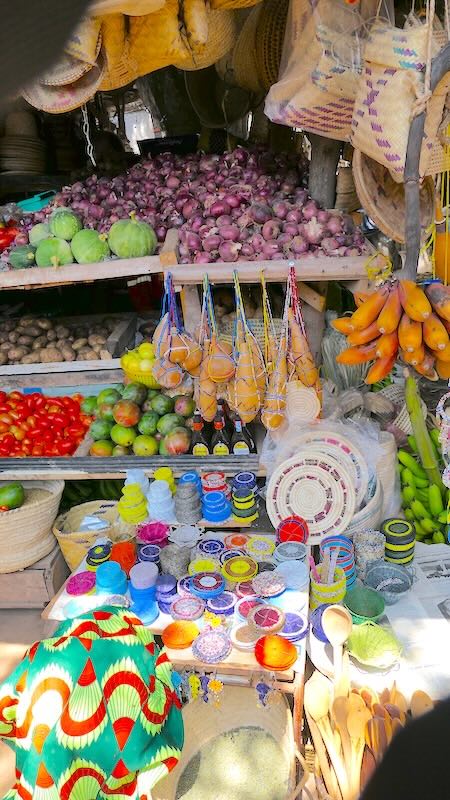
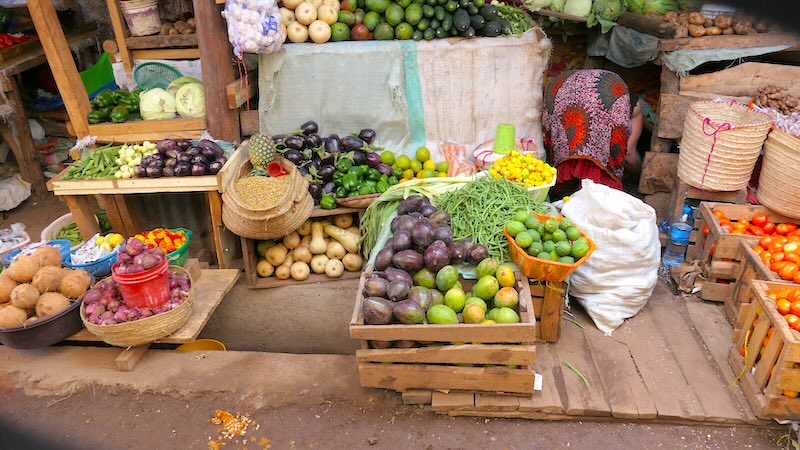
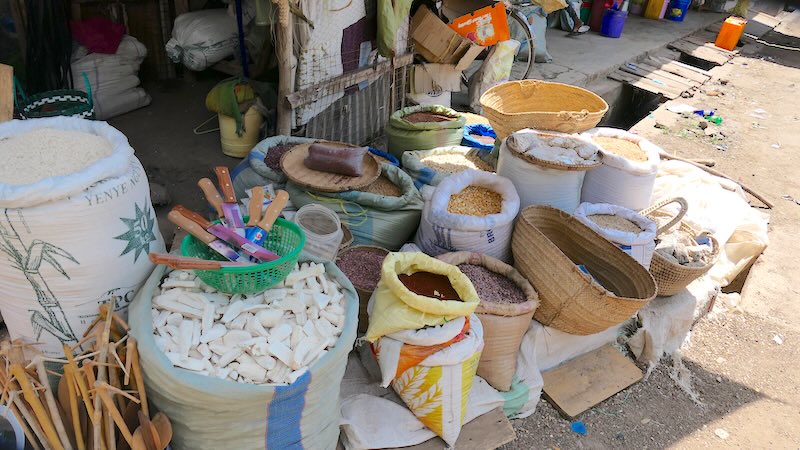
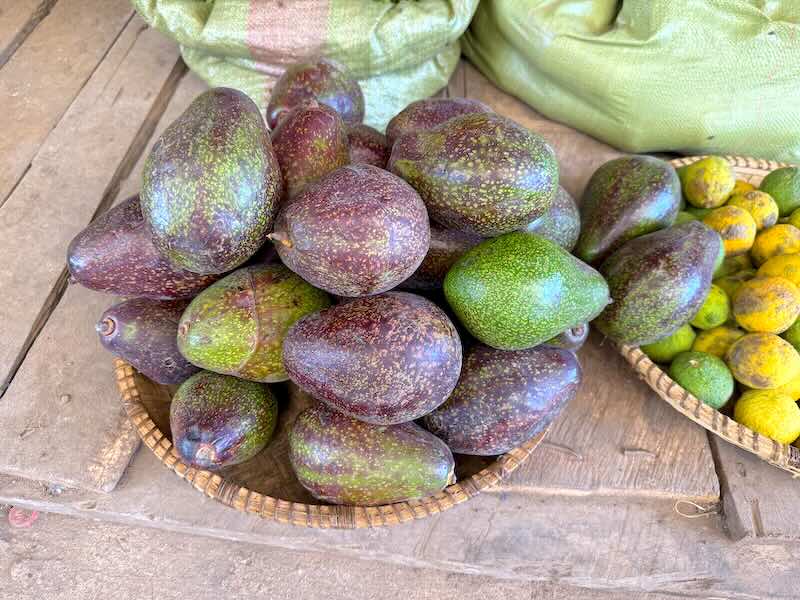
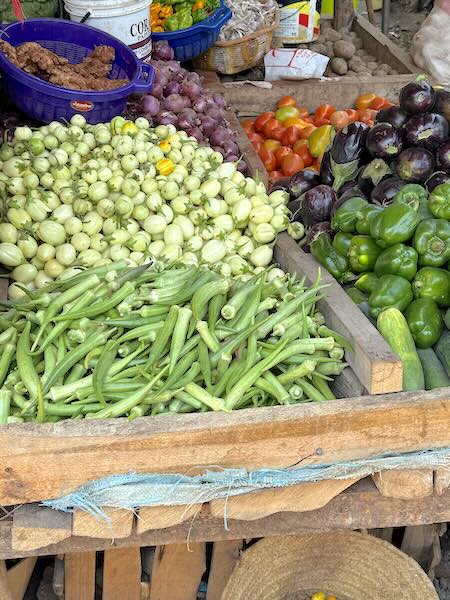
Für den täglichen Bedarf der Einheimischen gibt es eine riesige Auswahl an Hülsenfrüchten, die in Säcken präsentiert werden, sowie Stände mit Bergen von frischem Obst und Gemüse. Die Auslagen leuchteten in allen Farben: Tomaten, Paprika, Auberginen und Zwiebeln.
Dabei fiel mein Blick auf kleine, weiß-grünliche Früchte, die optisch irgendwo zwischen Zucchini und runden Tomaten lagen. Elly bemerkte meine Neugierde sofort: „Das sind Garteneier, afrikanische Eierfrüchte – im Grunde eine kleine, lokale Auberginenart! Ich schneide sie mir oft in Scheiben, brate sie in der Pfanne an und gebe frisches Rührei darüber.“
Die Schoten am Stand daneben hielt ich im ersten Moment für scharfe Peperoni, doch weit gefehlt. „Das ist Bamia, die Okra-Schote“, erklärte mir Elly.
Und da war er wieder, unser täglicher Suaheli-Unterricht im Alltag!
Am Abend hatte ich den Namen natürlich prompt wieder vergessen, aber Elly wäre kein guter Guide, wenn er das Gelernte nicht am nächsten Morgen im Auto abgefragt hätte. Und ja, ich habe unglaublich viel mitgenommen aus diesem Land: die Sprache, die Kultur, den Alltag der Menschen und das Verhalten der Tiere.
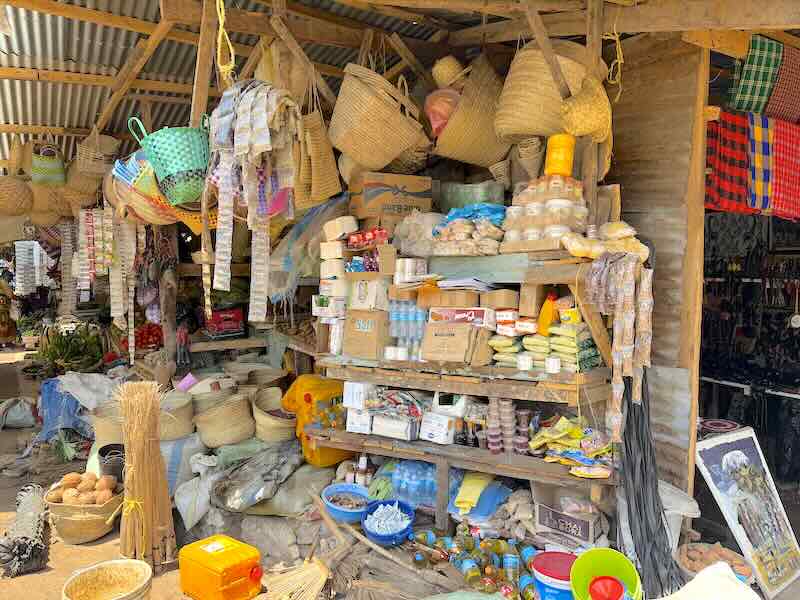
Die Regale in den Hütten waren bis zum Bersten gefüllt, jeder noch so winzige Zentimeter wurde optimal ausgenutzt. Säfte im Karton, Tüten mit Maismehl, kleine Wasserflaschen. Bei diesem Anblick musste ich sofort an den kleinen Lebensmittelladen meiner Mutter aus meiner Kindheit denken: Bei ihr wurde damals auch alles so dicht an dicht gepackt, schlichtweg, damit man den Kunden das komplette Sortiment anbieten konnte.
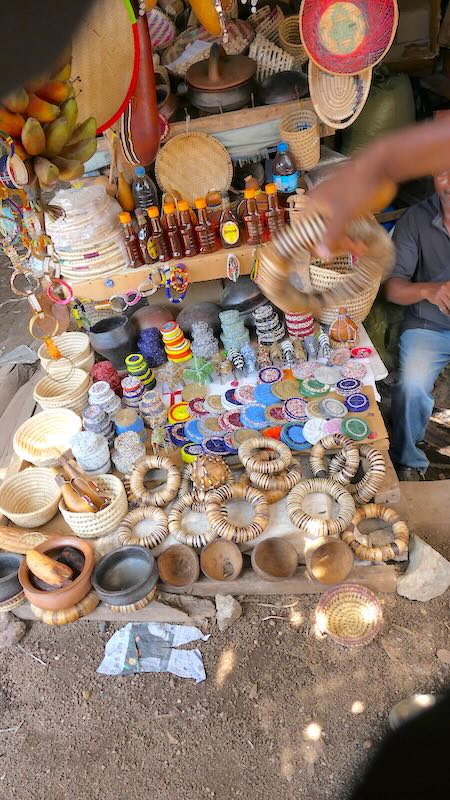
Neben selbstgepressten Speiseölen, die pragmatisch in alte Fanta- und Coca-Cola-Plastikflaschen umgefüllt waren, stand moderne Kokoscreme im Tetrapack aus dem Großmarkt.
Tradition und Moderne Hand in Hand!
Ndizi Nyekundu – Die roten Bananen von Mto wa Mbu
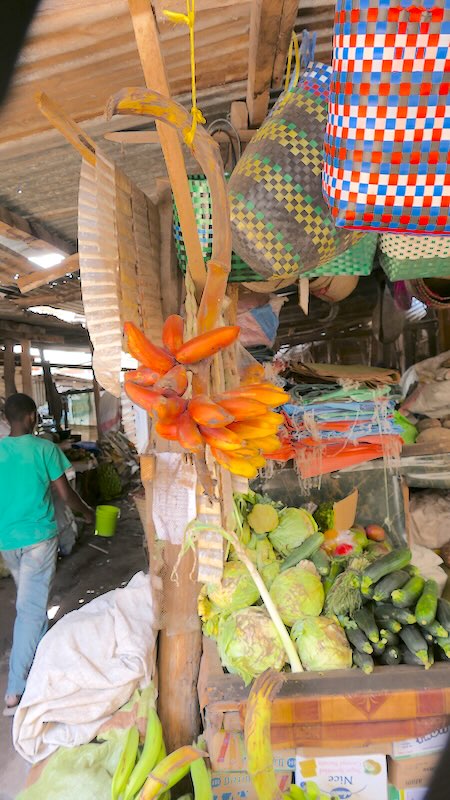
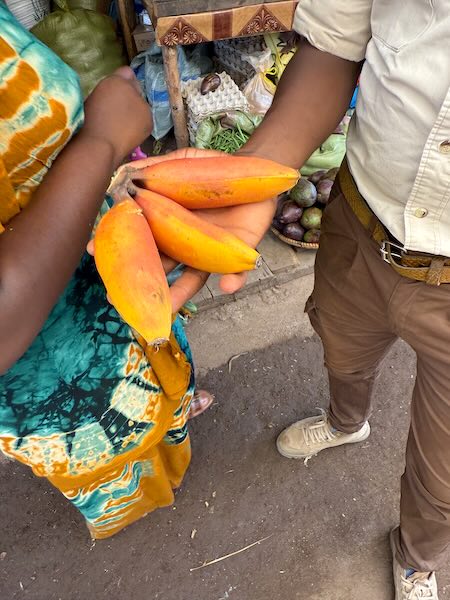
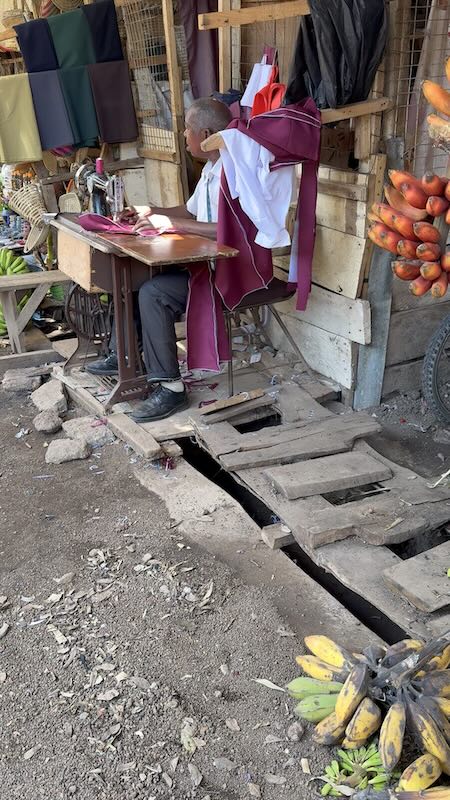
Das Obstangebot war absolut typisch für diese fruchtbare Region. Eine echte Besonderheit auf dem Markt von Mto wa Mbu sind die roten Bananen – Ndizi Nyekundu.
Ja, sie sind tatsächlich tiefrot und nicht gelb!
„Diese roten Bananen und viele andere spezielle Sorten werden genau hier auf diesem Markt für die Reisenden auf dem Weg hinein in die Serengeti angeboten“, erklärte uns Elly. Das Faszinierende ist, dass man diese roten Bananen tatsächlich fast ausschließlich hier und auf den Märkten in Arusha und Moshi findet. In den großen, modernen Supermärkten sucht man sie vergeblich. Hier zeigt sich die Stärke der kurzen Transportwege und der absoluten Frische: Die Bananen werden direkt in der Region angebaut und können vor Ort perfekt an der Staude ausreifen.
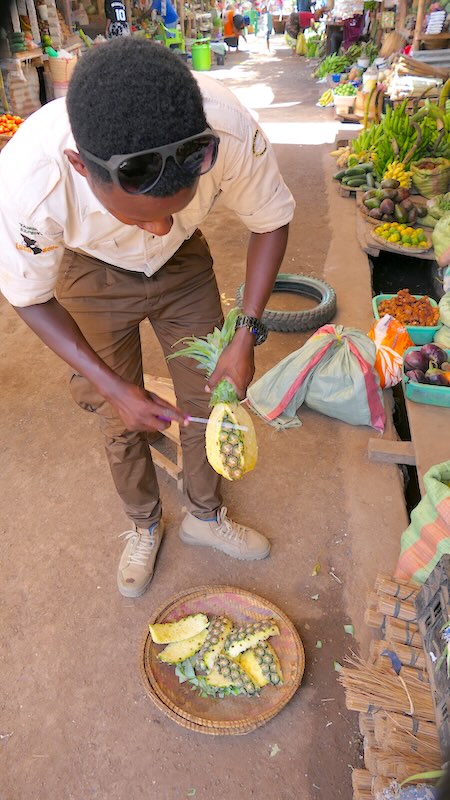
An einem der benachbarten Obststände kaufte Elly eine frische Ananas und mit einem Messer machte er sie uns direkt verzehrfertig. Für diesen schnellen Job sind die großen, rasiermesserscharfen Macheten, die man hier überall erwerben kann, einfach ideal. Bernd hat das geschickte Zerschneiden der Frucht direkt mit der Kamera gefilmt – ein tolles Video!
Marktfeeling für jedes Wetter
Die engen Gänge zwischen den Marktständen waren zum Schutz vor der sengenden Sonne und der stehenden Hitze mit großen, gewebten Decken überspannt. Das ist der beste Kompromiss, um ausreichend Tageslicht durchzulassen und gleichzeitig angenehmen Schatten und Schutz vor der Wärme zu bieten.
Dabei fiel uns noch etwas auf. Jetzt im Januar befand sich die Region in der kurzen Trockenzeit, und wir konnten uns kaum vorstellen, wie es hier wohl bei starkem Tropenregen aussieht. Direkt an den Fundamenten der kleinen Markthütten verlief eine Art Levada. Natürlich keine gemauerte Levada wie auf Madeira, sondern ein offenes Abwasserkanalsystem, dessen tiefe Gräben nur notdürftig mit losen Holzpaneelen abgedeckt waren. Ein tiefer Schritt daneben wäre fatal.
Handwerker, Näherinnen und Näher auf dem Markt in Mto wa Mbu
Besonders beeindruckend war die Handwerksmeile, in der direkt vor den Augen der Kunden perfekte Näharbeiten durchgeführt werden. Die Auswahl an Stoffen ist gigantisch. Von feinen, leichten Webstoffen bis hin zu schweren, traditionellen Qualitäten in den typisch afrikanischen Farben. Die Muster reichen von schlichtem Altrosa in Kombination mit klarem Weiß bis hin zu extrem farbenprächtigen, blütenreichen Motiven.
Gleich in der ersten Gasse trafen wir auf einen Schneider, der an seiner Maschine konzentriert eine traditionelle tansanische Tracht fertigte. An einem der Kunsthandwerksstände entschieden wir uns spontan für den Kauf von zwei Ringen, die kunstvoll aus den Fasern von Bananenblättern geflochten waren. In Tansania werden diese Ringe als Kopfpolster genutzt, um schwere Tongefäße oder Lasten ausbalanciert auf dem Kopf tragen zu können. Für uns Europäer waren sie zu Hause angekommen jedoch der ideale, rustikale Topfuntersetzer für die Küche! An diesem Stand gab es noch so viel mehr zu entdecken, und jedes einzelne Teil war ein echtes Unikat. Feine Perlenstickereien, bunte Perlentiere und kleine, runde Schmuckkästchen, die komplett mit bunten Perlen verwebt waren.
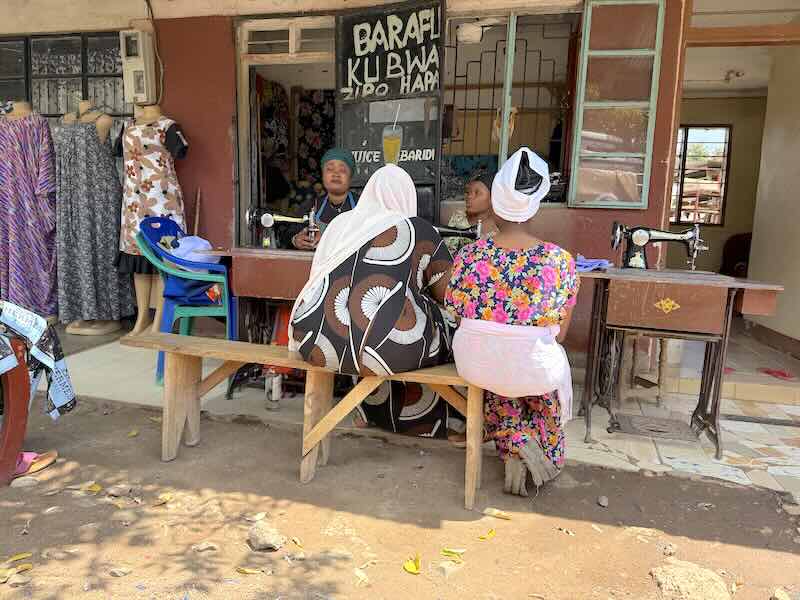
An der Stirnseite des Marktes saßen die Näherinnen in einer langen Reihe an ihren klassischen, robusten Butterfly-Tretnähmaschinen. Sie hatten ihre fertigen, farbenfrohen Kleider stolz auf Schaufensterpuppen drappiert und waren gerade unter lautem Rattern dabei, für zwei Kundinnen Maßanfertigungen zu schneidern.
Die beste Eierspeise Afrikas: Chips Mayai
Am Ende des Marktes stießen wir auf die kulinarische Meile – eine Fressmeile, genau wie man sie von unseren heimischen Straßenfesten kennt. In dieser Zeile reihten sich die unterschiedlichsten Stände aneinander. An einigen hing frisches, rohes Fleisch im Schaufenster, an anderen dampfte es aus großen Töpfen.
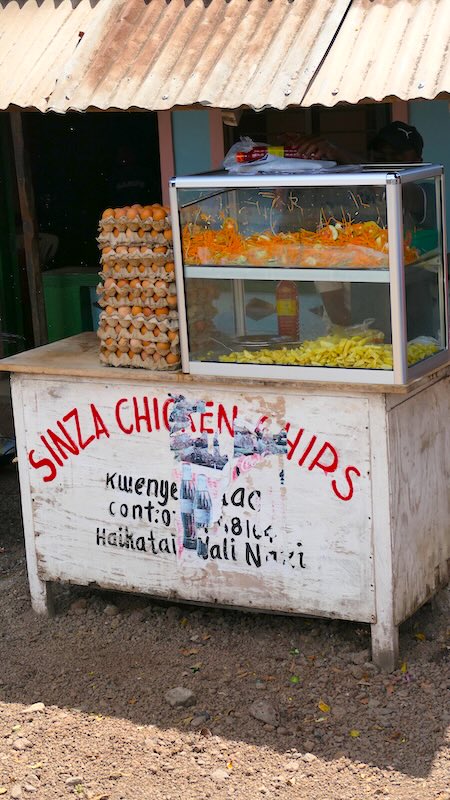
Und dann kamen wir an einen ganz besonderen Stand. „Oh, das sieht aber absolut lecker aus!“, entfuhr es mir spontan. Elly war natürlich sofort zur Stelle, lachte, ging zum Koch und bestellte uns eine Portion.
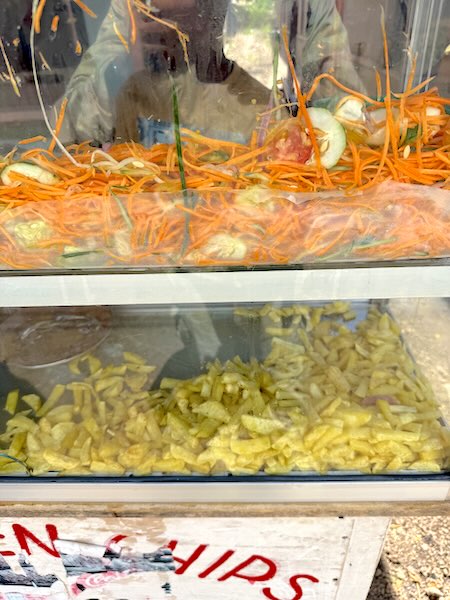
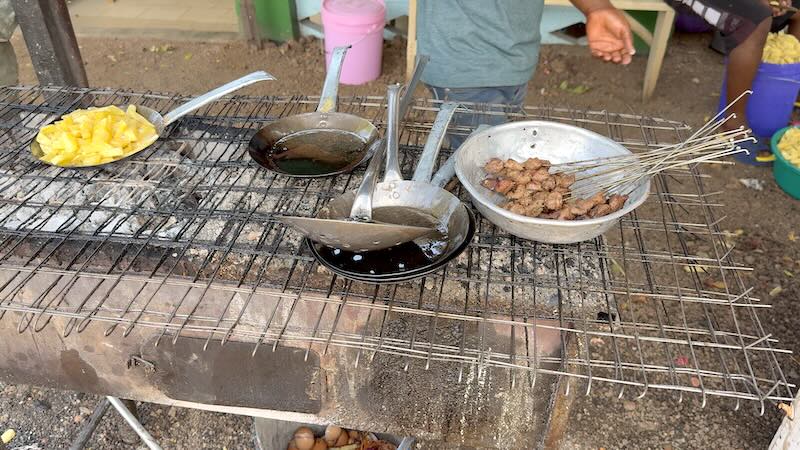
Das Gericht ist ein absoluter Klassiker der tansanischen Streetfood-Küche: Chips Mayai (oder auch Sinza Chicken Chips). Der Koch hatte bereits vorgekochte Kartoffelscheiben parat. Diese kamen in eine heiße, fettige Pfanne, wurden kurz angebraten, und dann schlug er kurzerhand drei frische Eier direkt darüber auf. Alles wurde mit geübten Bewegungen zu einem herzhaften Rührei-Kuchen verrührt. Es dauerte keine zehn Minuten, dann war unsere heiße Speise fertig und wurde uns dampfend in einer kleinen Aluschale überreicht.
Jetzt war unsere Mittagspause endgültig gesichert. Die herzhaften Lunch-Pakete aus dem Camp, ein paar kühle Getränke und diese fantastische, frisch zubereitete Eierspeise. Wir freuten uns riesig darauf, das Ganze gleich im Schatten zu genießen!