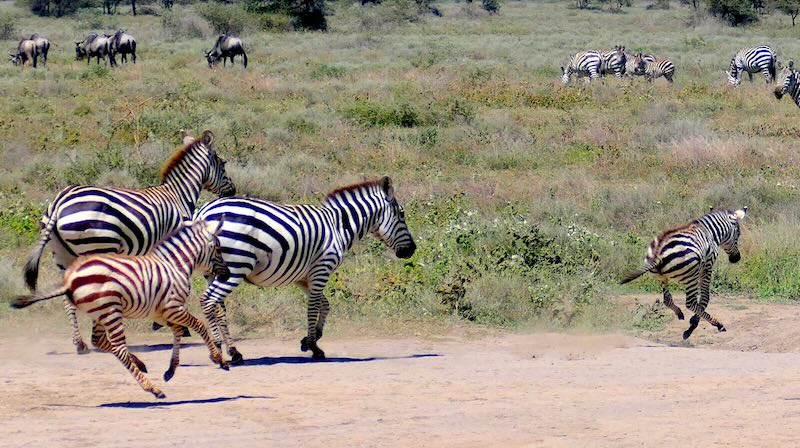
Im Arusha National Park unterwegs

Exploring Arusha National Park

Before heading out on our very first game drive in Arusha National Park, our guide, Elly, had a few formalities to clear up with us—such as signing the liability waiver for the safari. Everything out here happens entirely at your own risk. We were completely fine with that, even though at that point, we couldn’t yet gauge the actual danger of the wildlife, the ruggedness of the off-road tracks, or what lay ahead. It simply wasn’t comparable to an off-road tour in the US. But that was exactly why we chose a guided safari with a professionally planned itinerary!

Our plan for this first arrival day included a classic game drive with Elly, followed by a walking safari accompanied by an armed park ranger. After checking into the beautiful Arumeru River Lodge and enjoying a delicious lunch, we were finally ready to roll.

Heading Out to Arusha National Park

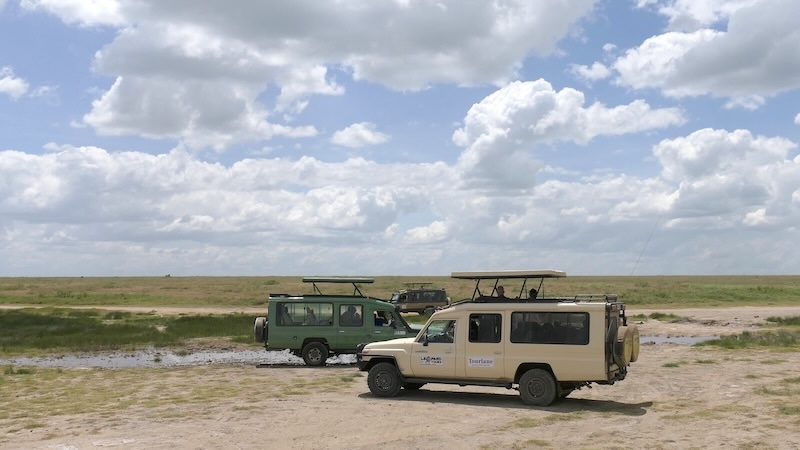
Elly was already waiting for us at the hotel entrance. Packed with our professional camera gear, we took our seats in the sturdy Land Cruiser. From the lodge, we headed back onto the Arusha-Himo Road (A23), driving through the town of USA River (pronounced Ussa-River). Shortly after leaving the town, we made a sharp left onto Momela Road.

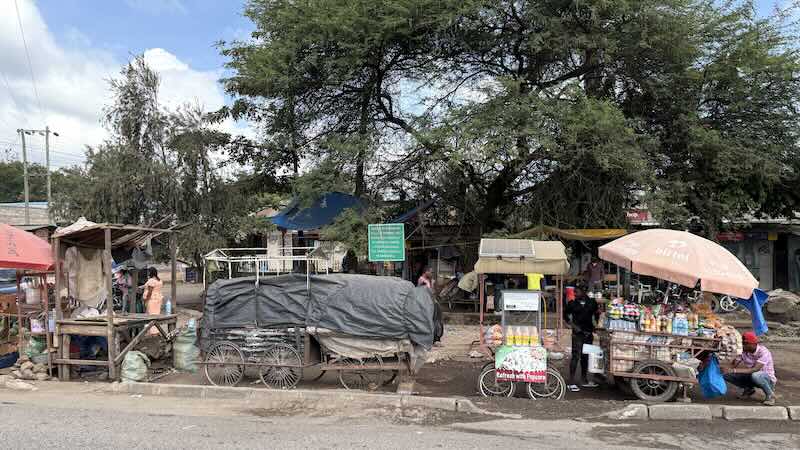
Momela Road feels entirely different from the A23 highway. Just a moment ago, we were cruising on the main road, and suddenly, we were navigating a bypass road where the scenery changed completely. Everything felt instantly more rural. To the left and right of the dirt track, there were wide sandy pathways, local huts, and occasional market stalls. Naturally, we let our eyes wander, soaking in every detail, but the drive felt far too short. After just 20 minutes, we already reached the entrance of the park: the Ngongongare Gate.

A Hidden Gem Away from the Crowds

The gate was completely quiet, and only a few other safari vehicles were scattered across the large parking lot. Elly grabbed his paperwork and headed off to handle the entry formalities. To the right of the large wooden entrance arch of Arusha National Park stood a deceptively real, life-sized statue of an elephant. A few other safari-goers used the waiting time to snap a selfie with this grey giant. We decided to stick to a quick photo of the statue without us in it.

After barely ten minutes, Elly returned, and we finally officially started our safari adventure. Entering our very first national park, our excitement skyrocketed. Lost in these thoughts, Elly briefly turned around to face us just as he drove underneath the wooden archway. „Karibu sana!“ (You are very welcome!) he smiled. We happily replied, „Asante sana!“ (Thank you very much!), and off we went.

From Ngongongare Gate to Momela Gate

Our meeting with the ranger for the walking safari was originally scheduled for 4:00 PM at the gate. However, just before we left the Arumeru River Lodge, Elly received an update: the ranger was already waiting for us shortly after 2:00 PM.

No matter how well you plan, out here, you always have to be ready for a change of plans! So, we adjusted our schedule and decided to drive straight to Momela Gate to meet the ranger right on time. Even though it is only a quick 20-minute drive from gate to gate, there was still plenty of time for impromptu stops. Elly reassured us with a smile: „We are going to see so many animals today, just wait and see!“ He certainly knew what he was talking about and knew these tracks inside out. A few minutes later, the magic began.

We continued along Momela Road, which consists of a well-maintained sand and gravel track. Now, you might think that driving along a main road through Arusha National Park wouldn’t offer many wildlife sightings. But you couldn’t be more wrong! Right from the very beginning, it was absolutely spectacular.

A massive clearing emerged to our right. To our untrained eyes, it looked like a giant meadow, but to safari experts—and to us over the coming days—it is known as a small savannah. Elly stopped the vehicle and turned around: „This savannah is also called the Little Serengeti.“

The „Little Serengeti“

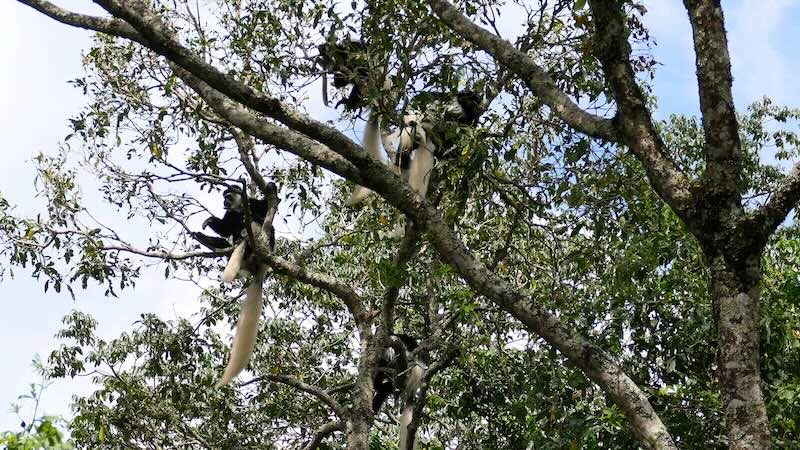
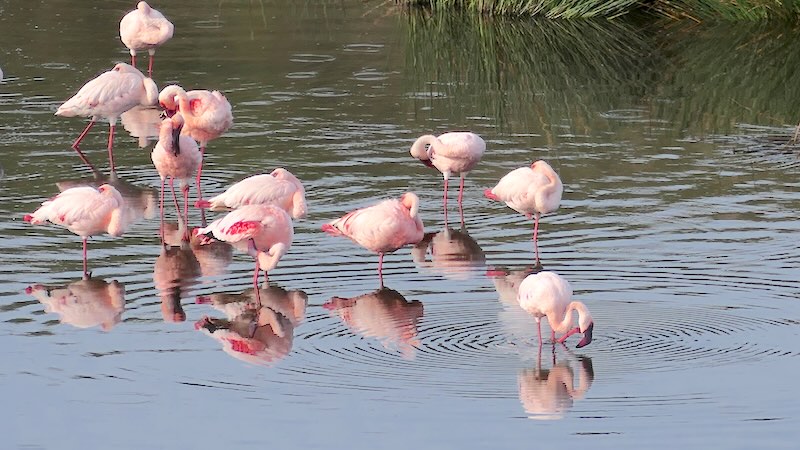
The moment he said Little Serengeti, it clicked. Spread out before us was a breathtaking savannah dotted with zebras, giraffes, and warthogs. Elly explained that deeper within Arusha National Park, you can also find elephants, Cape buffaloes, waterbucks, flamingos, monkeys, and countless other species. Arusha National Park truly is a hidden gem and the perfect introduction to a grand safari—a pristine, untouched piece of wilderness.

Elly cut the engine, and we stared into the distance, instantly raising our cameras to our eyes. We spent the next minutes in absolute awe, the quiet sound of our camera shutters filling the car.

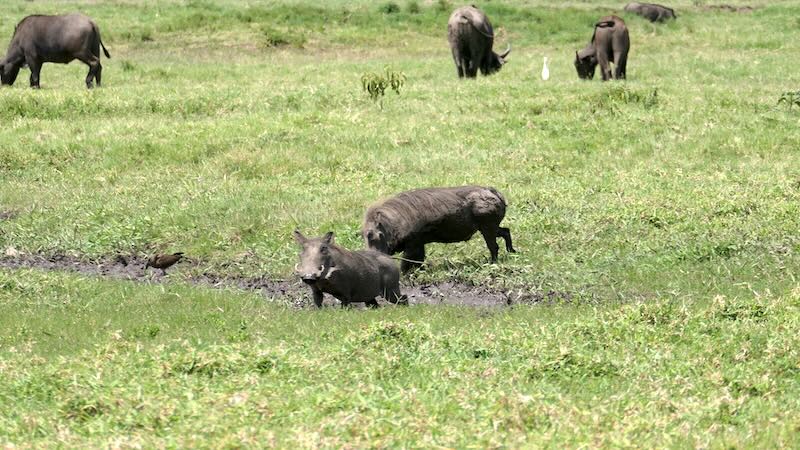
Groups of warthogs were grazing peacefully in the grass, though a few kept glancing in our direction. Naturally, warthogs are always on high alert!

Abundant Buffaloes

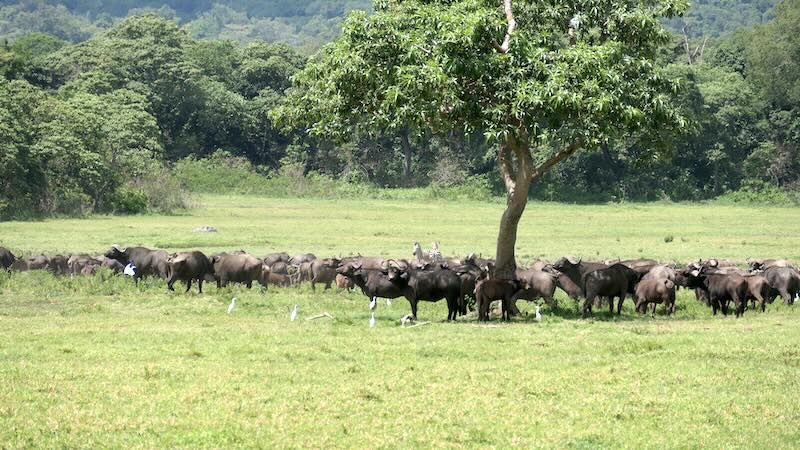
Further in the background, another large herd was grazing and resting in the shade of the acacia trees: a massive group of African Cape buffaloes. Seeing so many of them right at the start was incredible. From a distance, the buffaloes looked surprisingly small and peaceful. However, we were about to learn a lot more about them. Elly gave us a quick, serious note during this stop: „Cape buffaloes are among the most dangerous animals here in Africa. Just like the hippos!“

Across the entire clearing, all these different species were coexisting and grazing in absolute harmony. Cape buffaloes, warthogs, zebras, and giraffes formed a stunning display of colors against the lush green backdrop: shades of grey, deep black, brown-and-white patches, and bold black-and-white stripes. The warthogs provided the grey, the buffaloes the deep charcoal tones, the giraffes the elegant brown-and-white patterns, and the zebras their iconic stripes. During our very first hours here in Africa, right in Arusha, we felt completely overwhelmed by the beauty of nature. And to top it all off, the scenery was dotted with bright white specks from the countless cattle egrets hanging around the herds.

Massai Giraffes

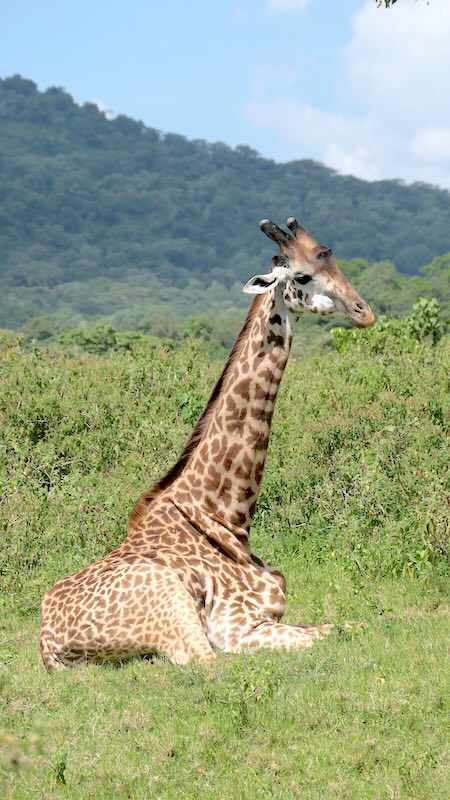
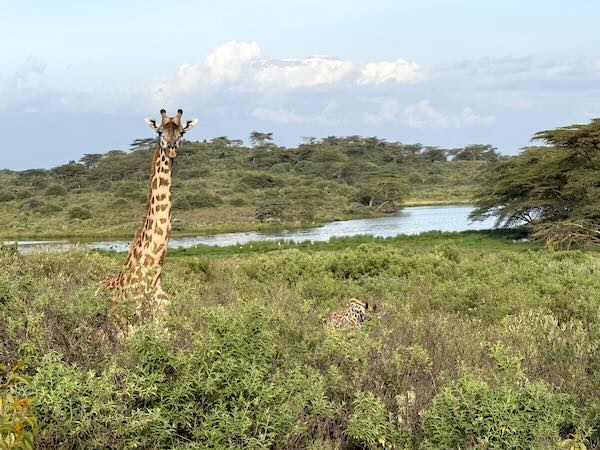
In the distance, we could see the long necks of giraffes reaching high into the sky among the trees. And then we spotted something truly extraordinary: giraffes lying down in the open grassland, calmly chewing their cud. It was one of the most majestic sights of the day.

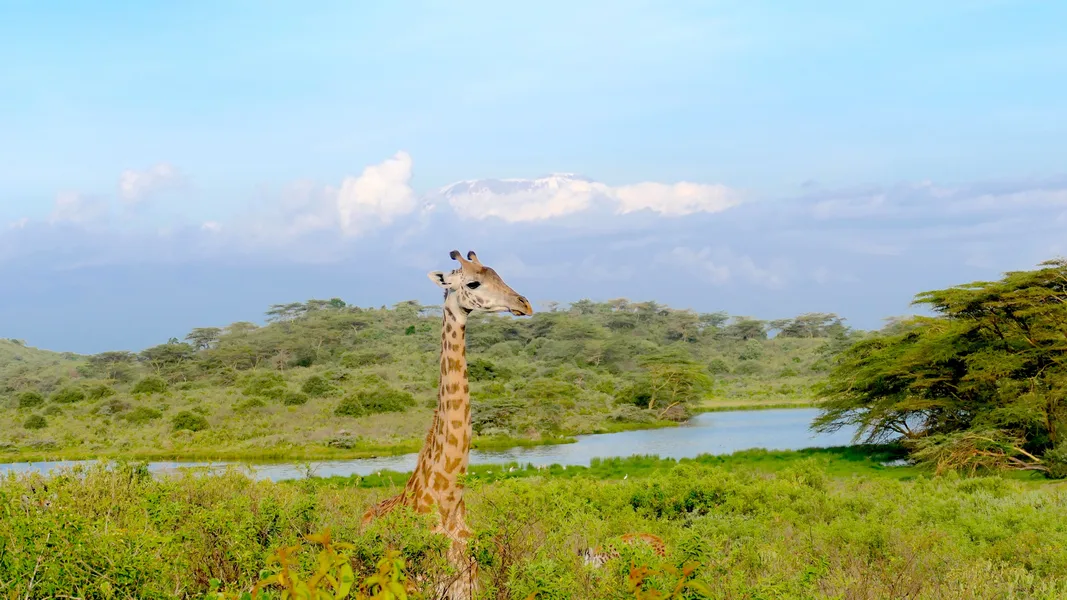
A vibrant green savannah, a crisp blue sky with fluffy white clouds, the outline of Mount Kilimanjaro in the background, and a giraffe neck right in the center of it all. A Photoshop collage? No, this was completely real! The absolute dream shot for any photographer.

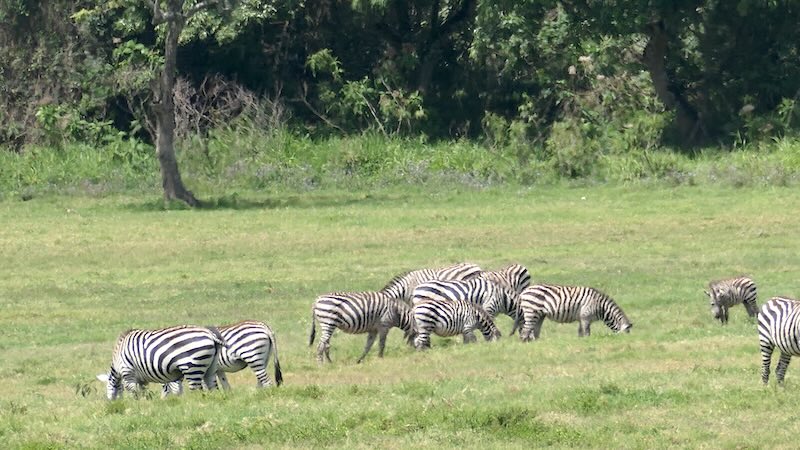
Nearby, a herd of zebras was enjoying the fresh green grass, just like the warthogs and buffaloes. „These are Plains zebras,“ Elly explained. „We will encounter so many more zebras on this safari, you can really look forward to it.“

Just one stop later, we found ourselves incredibly close to a large group of giraffes right on the plain. They were resting in the grass, enjoying the tranquility, and calmly chewing. Even while lying down, their incredibly long necks still towered high above the surrounding bushes of the Little Serengeti. Elly confirmed our amazement: „These are Masai giraffes, one of the largest giraffe subspecies in Africa!“

Like Fingerprints in Nature

These Masai giraffes have a fascinating, jagged, and highly irregular spot pattern. Just like many other species in the animal kingdom, you can actually distinguish every single giraffe from another simply by looking at their spots. The pattern is completely unique to each individual—much like a human fingerprint.

It reminded us of something we learned years ago during a humpback whale-watching excursion. Every single humpback whale has a completely unique pattern on the underside of its fluke (the tail fin). In fact, researchers log these flukes in a massive catalog to identify the whales worldwide!

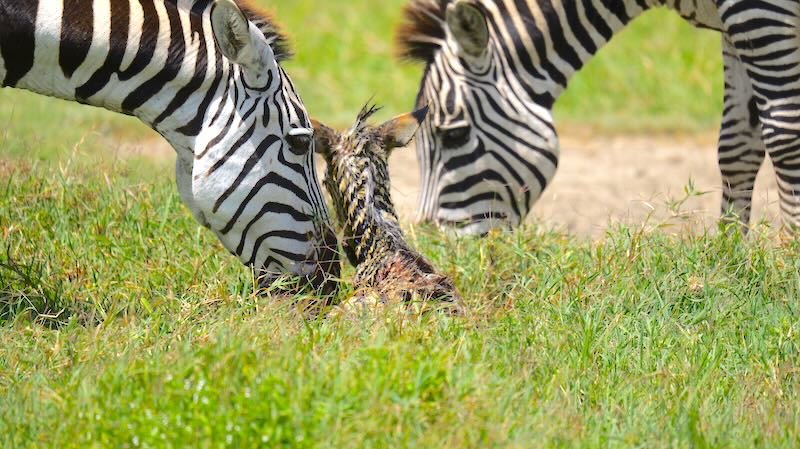
Similarly, zebras have their own unique stripe patterns, which are particularly vital for survival, helping a zebra mare and her young foal recognize each other instantly in the middle of a massive herd.

In our next report, we will lace up our boots and take you along on our walking safari—getting thrillingly close to wild buffaloes on foot!

Im Arusha NP unterwegs

Vor unserem Start zur ersten Fahrt im Arusha NP hatte unserer Guide, Elly, noch einige Formalitäten mit uns zu klären. So wie der Haftungsausschluss für die Safari. Es findet halt alles auf eigene Gefahr statt. War für uns OK, wobei wir die Gefährlichkeit der Tiere, die Offroad-Wege und vieles mehr noch gar nicht abschätzen konnten. Es war einfach nicht mit einer Offroad-Tour in den USA vergleichbar. Aber genau deshalb hatten wir uns ja für eine Safari mit Guide und einer genau festgelegten Tour entschieden.

Für diesen ersten Ankunfts-Tag war eine Pirschfahrt mit Elly und dann ein Pirschgang mit einem Ranger vorgesehen.

Nachdem wir uns in der Arumeru River Lodge eingerichtet hatten und ein Mittagessen genossen hatten ging es los.

Aufbruch zum Arusha NP

Elly erwartete uns am Hoteleingang und wir, bepackt mit unseren Kameras, nahmen Platz im LandCruiser. Von der Lodge aus ging es zurück auf die Arusha-Himo-Road (A23) durch USA-River (Ussa). Kurz hinter dem Ort ging es dann nach links in die Momela Road. Die Momela-Road unterscheidet sich sehr stark von der A23. Gerade eben noch auf der Hauptstraße und nun weiter auf der Nebenstraße. Und so zeigte sich auch das gesamte Straßenbild. Es wirkte jetzt alles viel ländlicher. Rechts und links neben der Road gab es große Sandwege, viele Hütten und ab und an auch noch Verkaufsstände. Klar hatten wir unsere Blicke auch hier schweifen lassen, aber die Fahrt war dann doch viel zu kurz. Nach 20 Minuten waren wir bereits am Arusha National Park Gate, das Ngongongare Gate.
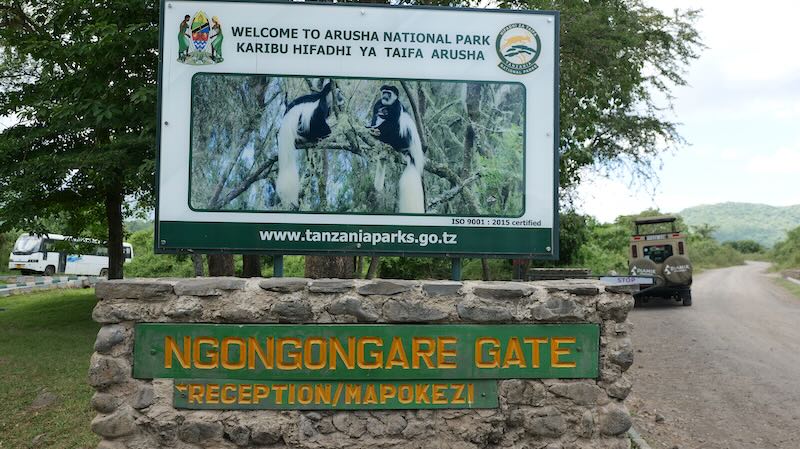
Am Gate war nichts los. Auch auf dem großen Parkplatz waren nicht viele Fahrzeuge. Elly schnappte sich seine Unterlagen und erledigte die Formalitäten. Rechts vom großen hölzernen Eingangstor zum Arusha NP gab es eine täuschend echte Statue eines Elefanten. Einige der Safari-Touristen nutzen hier die Wartezeit um ein Selfie mit diesem Giganten zu schießen. Wir hatten es bei einem Foto ohne uns belassen.

Nach knapp 10 Minuten kam Elly wieder und wir starteten in unser Abenteuer Safari. Vor uns der erste Nationalpark, der Arusha NP und unsere Freude stieg bis ins Unermessliche. Noch in diese Gedanken vertieft, drehte sich Elly kurz zu uns um während er durch den Torbogen fuhr.

„Karibu sana“ und wir erwiderten „Asante sana“ und nun ging es los.

Vom Ngongongare Gate zum  Momela Gate

Das Treffen mit dem Ranger war eigentlich zu 16:00 am Gate zu dem Pirschgang geplant gewesen. Aber kurz vor unserem Start an der Arumeru River Lodge hatte Elly die Info bekommen, der Ranger wartet schon kurz nach 14:00 auf uns.
Also Planung hin oder her, eine Planänderung musste her.
Also hieß es eine direkte Fahrt zum Momela Gate zu starten um dort den Ranger rechtzeitig zu treffen. Von Gate zu Gate nur knapp 20 Minuten und doch noch genug Zeit um Stopps einzuplanen. Elly beruhigte uns „Wir werden heute noch so viele Tiere sehen, seid gespannt!“ Er wusste schließlich wovon er redet, kennt er sich doch hier gut aus. Ein paar Minuten später war es dann soweit.

Es ging nun weiter die Momela Road entlang. Entlang einer guten gefestigten Sand- und Schotterstraße. Jetzt meint man, ok, entlang solcher Straße durch den Arusha NP, da kann man doch nichts sehen. Aber weit gefehlt. Gleich von Anfang an war es einfach gigantisch.

Es tauchte rechts von uns eine große Lichtung auf. Für uns war eine große Lichtung, für die Kenner und in den nächsten Tagen auch für uns war es nur eine kleine Savanne. Elly stoppte und fing an zu erzählen. „Diese Savanne wird auch kleine Serengeti genannt“.
Small Serengeti

Kleine Serengeti, uns wurde dann auch gleich klar warum.

Eine Savanne mit Zebras, Giraffen und Warzenschweinen und weiter im Arusha NP  gibt es auch Elefanten, Kaffernbüffeln, Wasserböcken, Flamingos, Affen und viele andere Tiere. Der Arusha NP, ein Kleinod gleich zum Start in eine große Safari. Ein Stück unberührte Natur.

Elly hielt den Wagen an und wir blickten in die Ferne, zückten unsere Kameras. Staunen und Fotoklicken wechselten sich ab!

Die Warzenschweine grasten in Gruppen. Einige blickten in unsere Richtung. Klar, die Warzenschweine immer in Habachtstellung.

Und noch weiter hinten gab es eine weitere Gruppe, welche dort graste und unter den vielen Bäumen im Schatten lagen. Es war eine sehr große Gruppe von Büffeln. So viele Büffel, die Kaffernbüffel, so toll. Die Büffel wirkten aus der Ferne so unscheinbar, wirkten so friedlich. Aber wir werden noch viel über die Büffel erfahren. Elly meinte bei diesem Stopp nur kurz „Kaffernbüffel sind mit die gefährlichsten Tiere hier in Afrika. So wie auch die Hippos!“

Auf der gesamten Lichtung waren sie nun alle gemeinsam so friedlich am Grasen. Kaffernbüffel, Warzenschweine, Zebras und auch Giraffen. Ein Farbenspiel inmitten dem satten Grün. Grau, grau bis Schwarz, braun-weißes Fleckenmuster und die weiß-schwarzen Streifenmuster. Grau für die Warzenschweine, grau-schwarz für die Büffel, braun-weiß für die Giraffen und weiß-schwarz für die Zebras. Unsere ersten Stunden hier in Afrika, in Arusha und wir sind überwältigt von der Natur. Und ach ja, neben diesen vielen Farben immer wieder ein weißer Tupfer von den vielen, vielen Kuhreihern.

Wiederkäuende Giraffen

An vielen anderen Bäumen sahen wir auch in der Ferne bereits Giraffen. Giraffenhälse ragten in den Himmel. Und dann das Außergewöhnliche – liegende, wiederkäuende Giraffen ebenfalls auf der Grasebene. Es war mit der erste erhabenste Anblick.
Grüne Savanne, blauer Himmel mit weißen Wolken, der Kilimandscharo und mittendrin ein Giraffenhals.
Fotomontage? Nein, es ist echt! Einfach die perfekten Fotomomente!
Und Zebras, die sich, wie die Warzenschweine, wie die Kaffernbüffel an dem frischen Gras genüsslich bedienten. „Es sind Steppenzebras“, so meinte Elly. „Wir werden noch so viele Zebras hier auf der Safari antreffen, freut euch drauf“.

Nur einen Stopp später dann viele Giraffen in unmittelbarer Nähe auf der Lichtung. Sie lagen im Gras, genossen die Ruhe und waren am Wiederkäuen. Selbst liegend ragen sie mit ihren langen Hälsen weit über die vielen Sträucher in der kleinen Serengeti hinweg. Elly konnte das dann auch bestätigen. „Es sind Massai-Giraffen und eine der größten Giraffen-Arten hier in Afrika!“

Wie Fingerabrücke in der Natur

Diese Massai-Giraffen haben ein sehr interessantes Fleckenmuster, gezackt und unregelmäßig. Wie viele andere Tierarten hier im Tierreich kann man anhand der Fleckenmuster jede Giraffe von jeder anderen Giraffe unterscheiden. Das Fleckenmuster ähnlich unserem menschlichem Fingerabdruck.

Etwas ähnliches hatten wir vor Jahren bei einer Walbeobachtung von Buckelwalen erfahren. Jeder Buckelwal hat eine eindeutige Musterung an der Unterseite der Schwanzflosse. Die Buckelwale sind so sogar alle in einem Katalog registriert!

Und auch die Zebras haben eine eindeutige Fleckenmusterung und diese ist besonders für Zebrastute und Zebrafohlen  überlebenswichtig.
Ähnliche Beiträge